
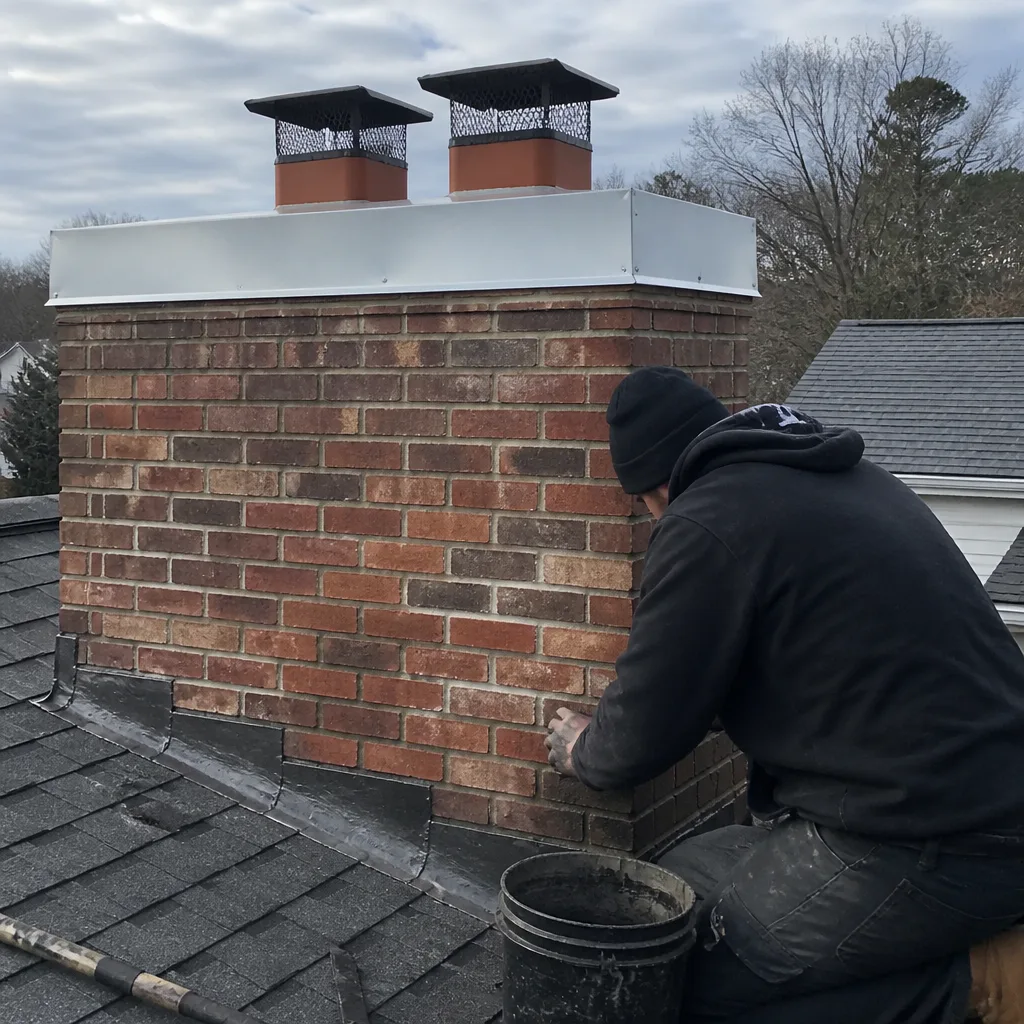
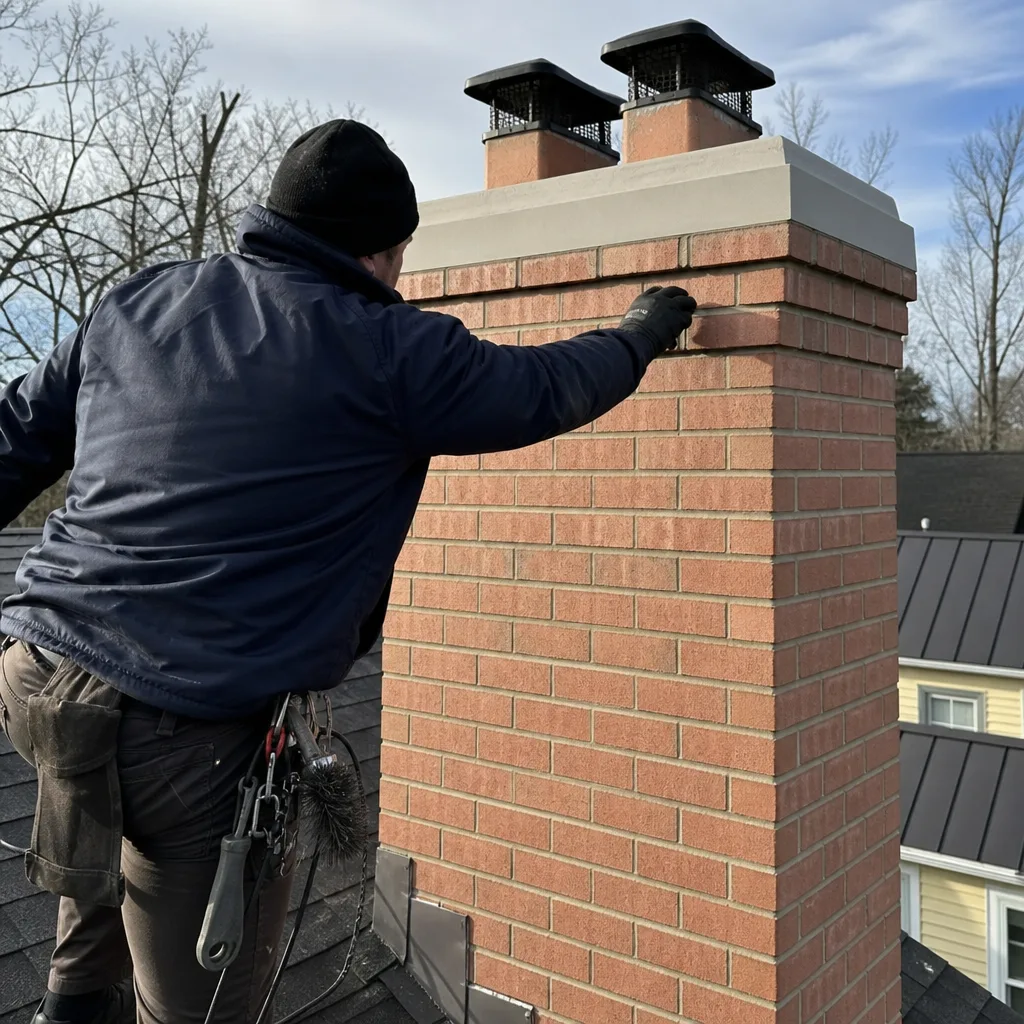
Level 1 sweep and inspection to the NFPA 211 annual standard - flue, crown, cap, and flashing checked and photographed
Chimney sweep logs do not sweep chimneys. They loosen some creosote - which then falls where a brush and vacuum still have to collect it.
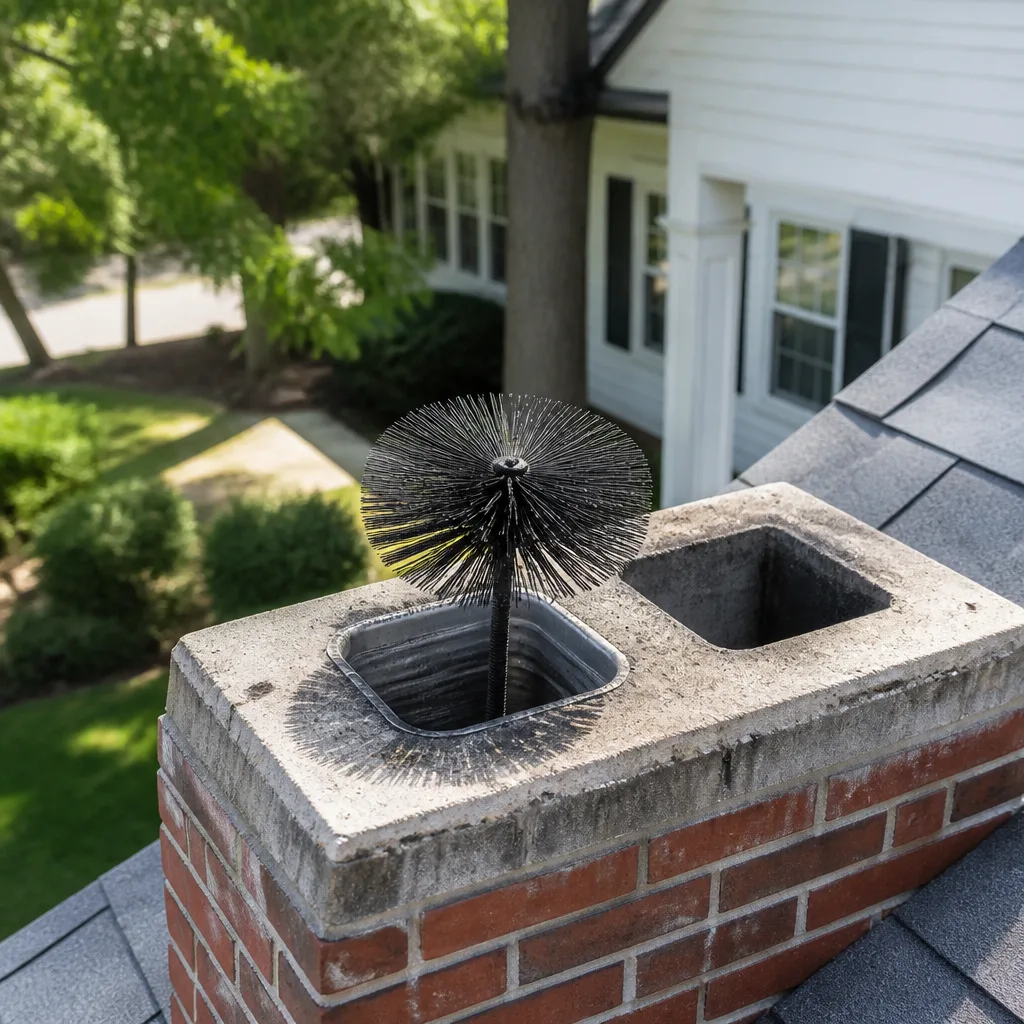
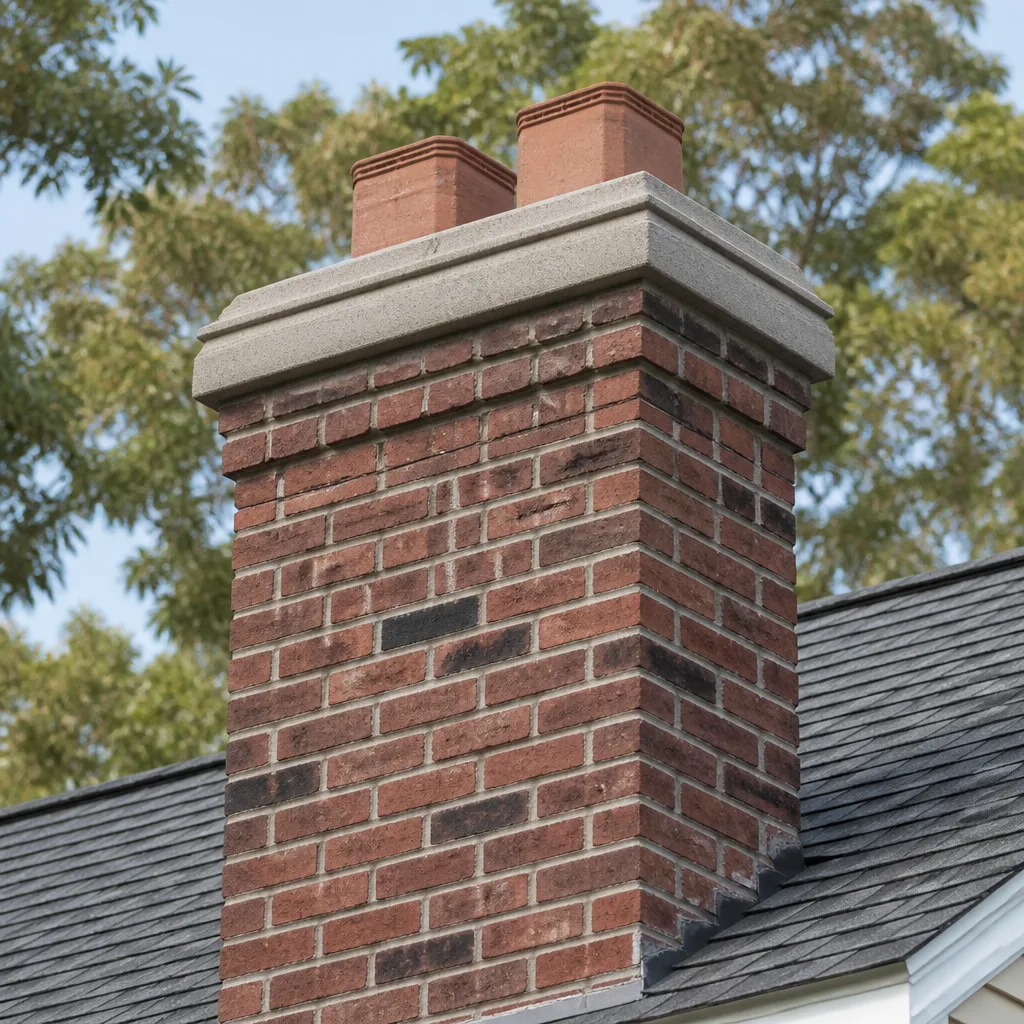
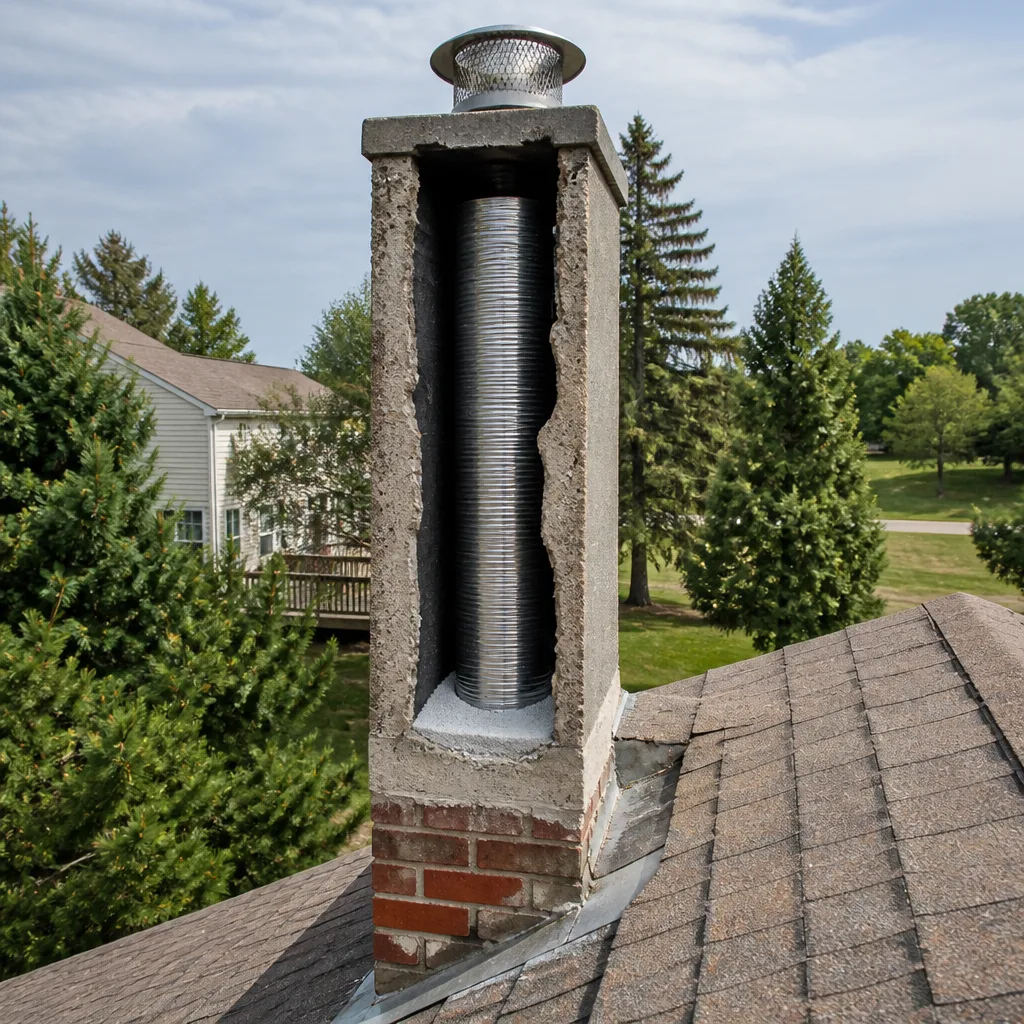
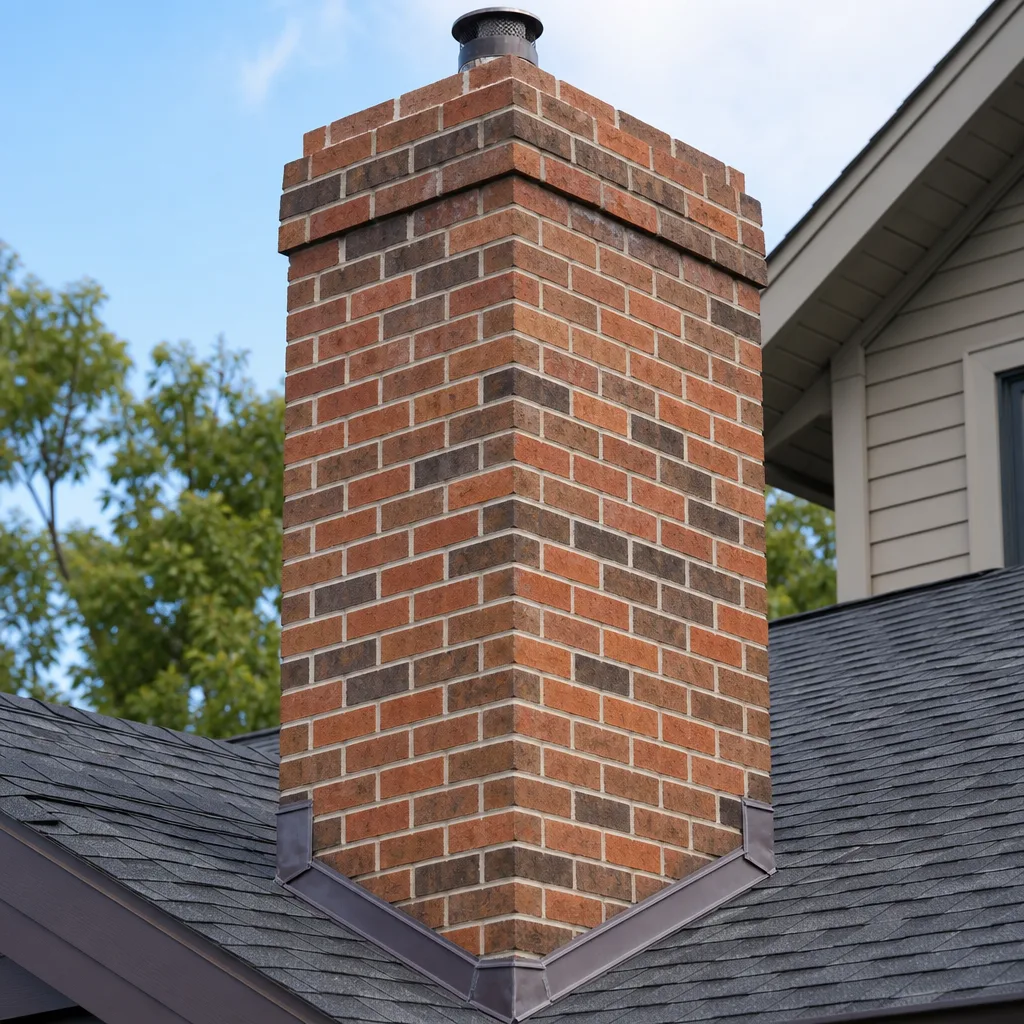
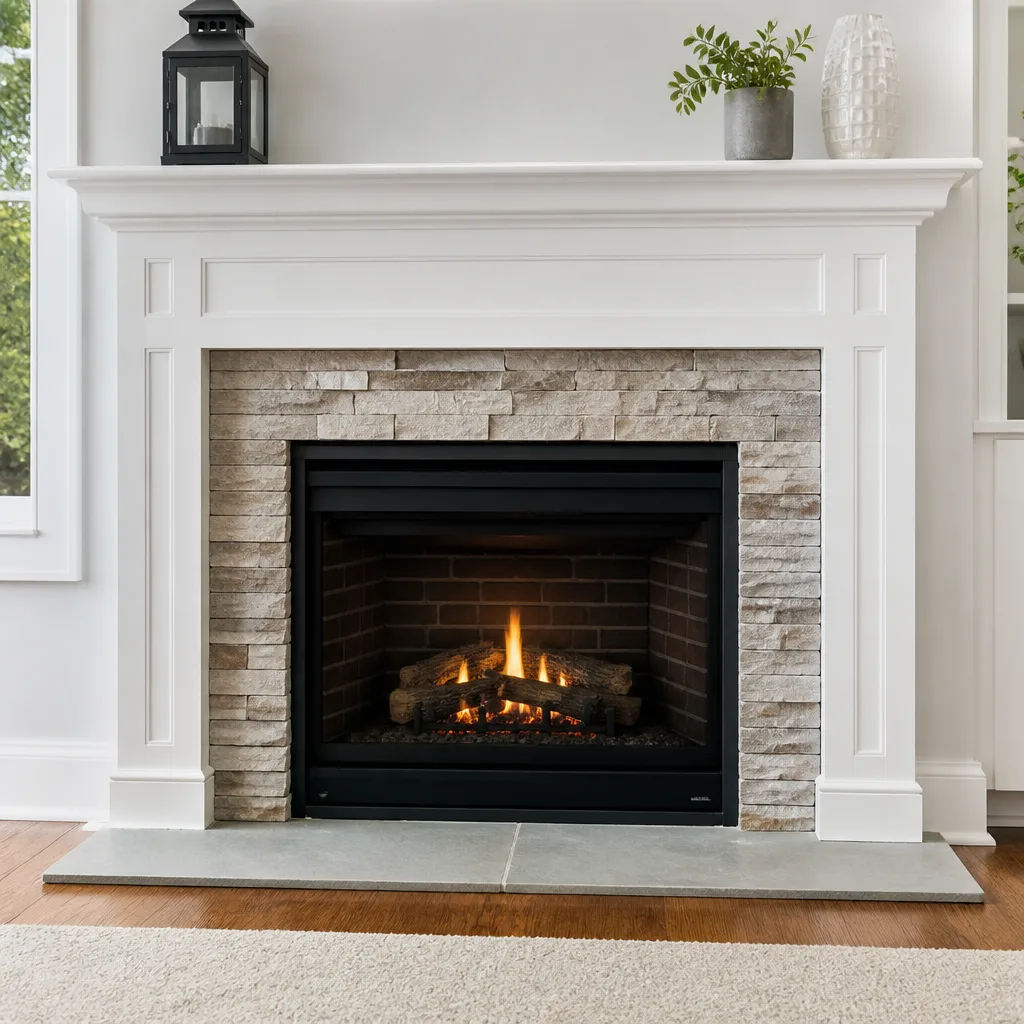
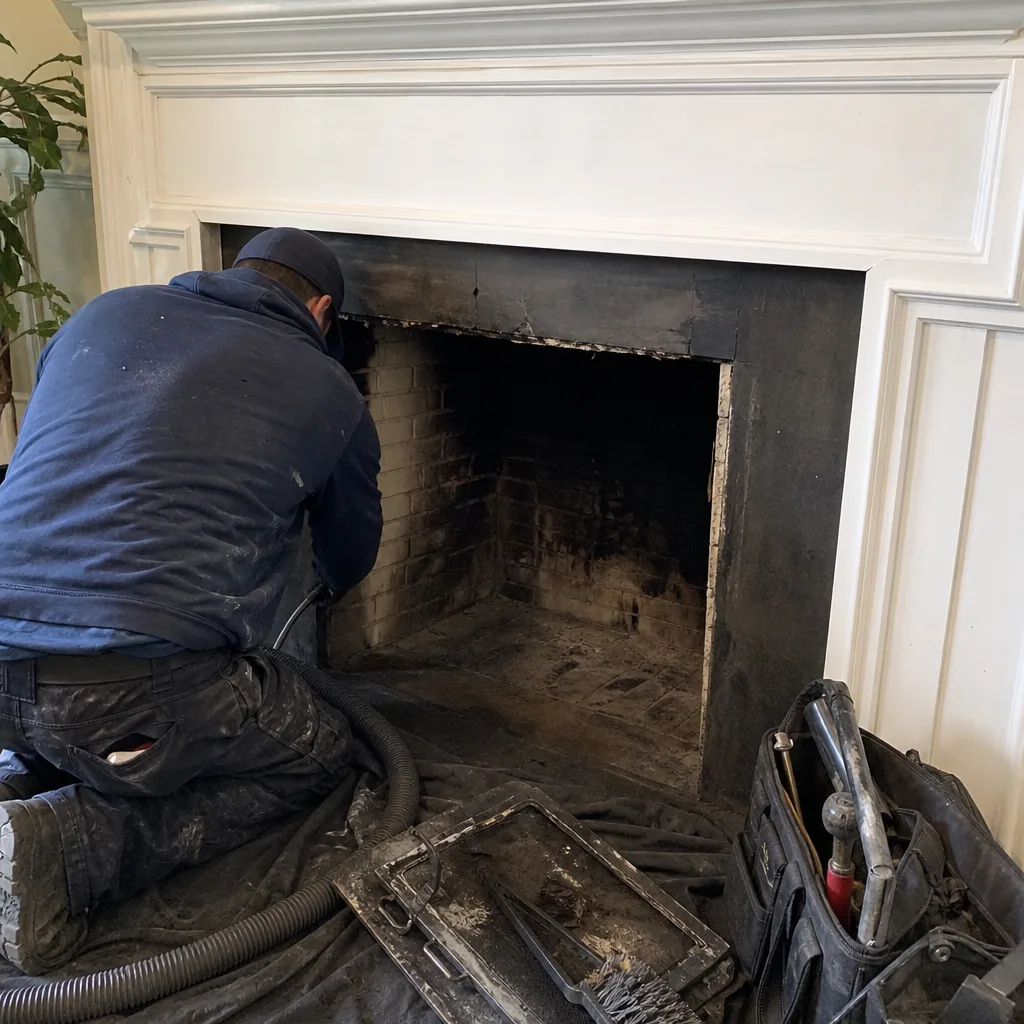 Before
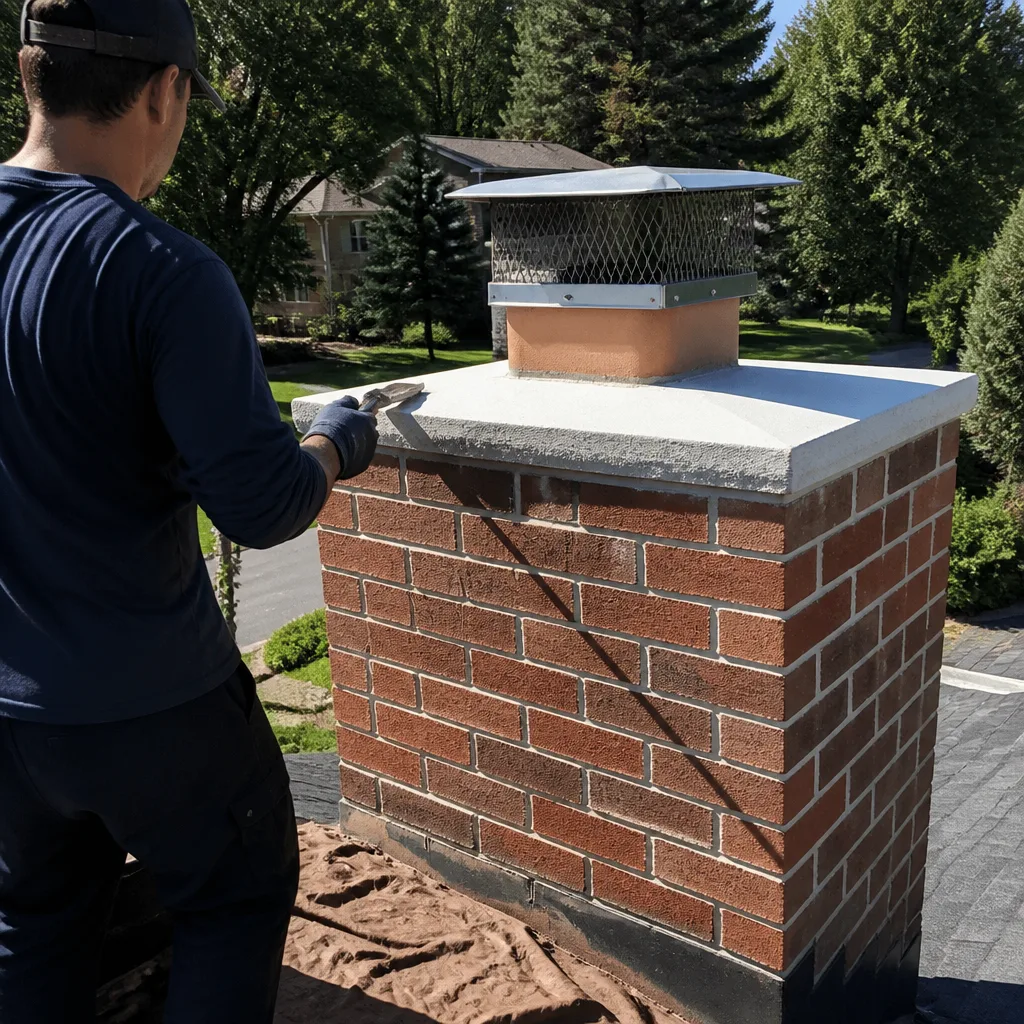 After
After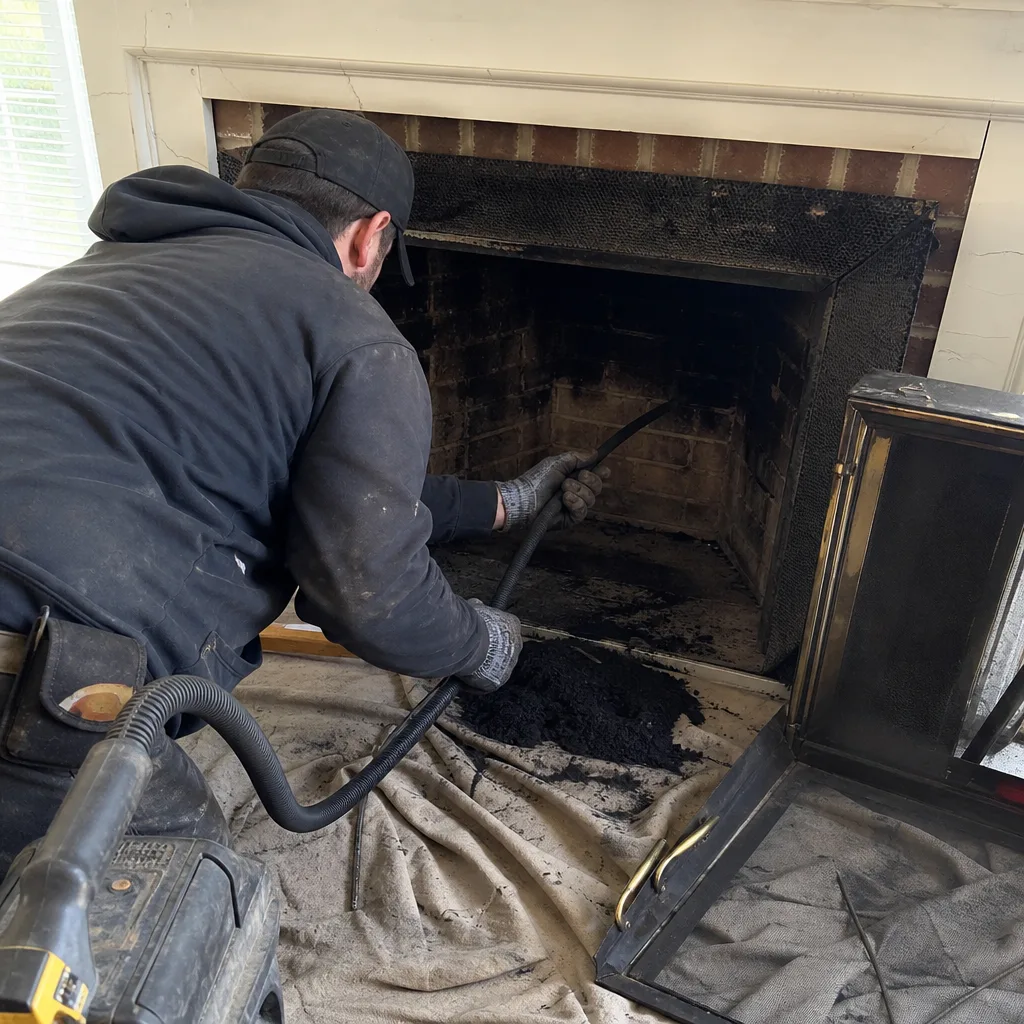 Before
 After
After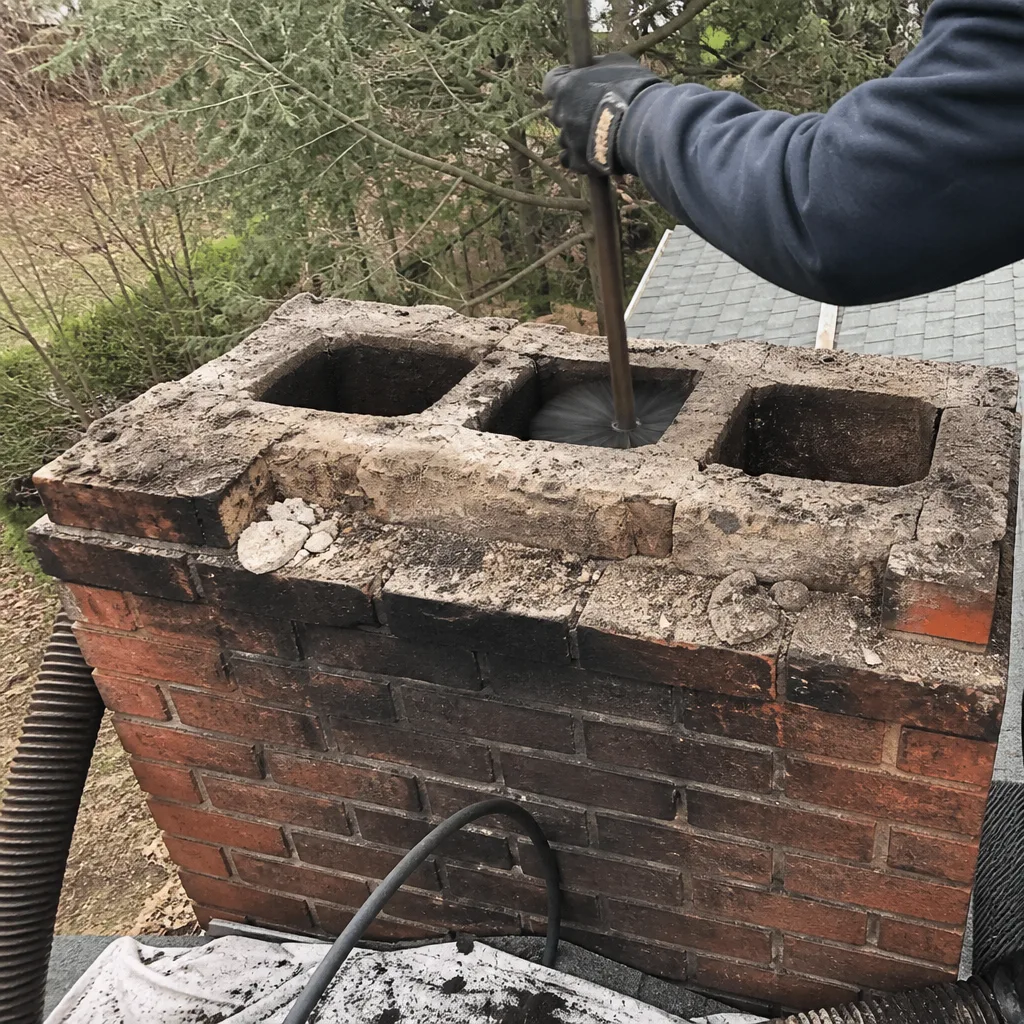 Before
 After
AfterCreosote Removal in Annapolis, MD
Creosote removal in Annapolis typically runs $150 to $800, depending on how much has built up and which class of deposit we’re dealing with. Most standard Chimney Cleaning & Sweep services for Stage 1 creosote are completed in a single visit; Stage 3 deposits – the glazed, tar-like kind – require chemical treatment and a follow-up sweep. If your fireplace smells like a campfire in July, or you haven’t had your flue cleaned in more than a year, there’s a real chance creosote is already accumulating in ways a flashlight won’t show.
At Level Two Chimney Annapolis, creosote removal is part of every Chimney Cleaning & Sweep in Annapolis we perform. We run a camera down the flue on every visit – not as an add-on, but as standard – so we can classify what we’re looking at before anyone picks up a brush. You get a written price before work starts, a documented photo record when it’s done, and a 365-Day Done Right Promise on every job. Call us at (443) 274-4231 to get a written estimate with no obligation.
What Creosote Actually Is – and Why Annapolis Homes See It Often
Creosote is the byproduct of incomplete combustion. When wood burns cooler than it should – wet wood, a restricted air supply, a short burn cycle – the smoke carries unburned carbon particles up the flue. As that smoke hits the cooler upper sections of the liner, those particles condense and stick. Over time they layer. Over more time, they harden.
Annapolis sits in a humid coastal climate on the Chesapeake Bay, and that matters for creosote in two ways. First, the shoulder seasons here are mild enough that a lot of homeowners burn fires on cool fall evenings in Eastport or Murray Hill with dampers barely cracked – low-heat, short-duration burns that are ideal conditions for creosote formation. Second, the moisture in the air, especially in homes closer to the water in Hillsmere Shores or on the South River tributaries, means wood that’s stored outdoors often holds more moisture than it should, even when it looks dry. Wet wood produces cooler, wetter smoke. Cooler, wetter smoke leaves more deposits.
We see heavier Stage 2 and Stage 3 buildup in Annapolis homes than in many inland Maryland markets, and the pattern is consistent year after year. It’s not a scare tactic – it’s what the camera shows us.
The Three Stages of Creosote
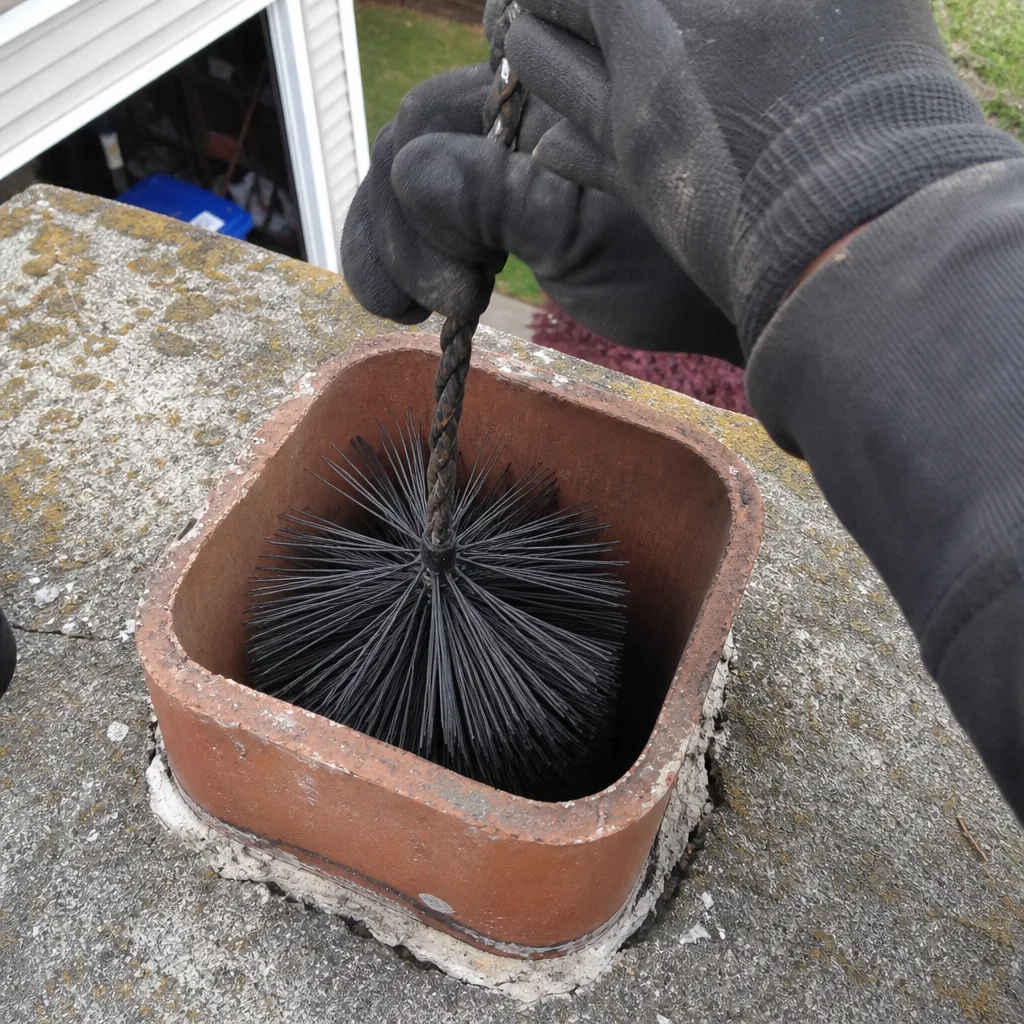
- Stage 1 (Class I): Loose, flaky, sooty deposits. Removed with standard rotary brushes in a single visit. The cheapest and easiest to address.
- Stage 2 (Class II): Tar-like, crunchy, or hardened layers, often with a shiny surface. Requires more aggressive brushing – sometimes a rotary power head – and takes longer to clear. Costs more because it takes more time and sometimes a second pass.
- Stage 3 (Class III): Glazed, concentrated, and highly flammable. This is the one fire investigators point to. Chemical treatment with a product designed to alter the deposit’s structure is applied first, a waiting period follows, then we sweep. Depending on severity, a second visit may be needed. NFPA 211 is explicit that Stage 3 deposits are a fire hazard requiring professional removal – this is not a DIY situation.
Knowing which stage you have is the whole point of a Level 1 Inspection with a camera. A company that charges you for a cleaning before classifying the deposit is working in the dark – sometimes literally.
When You Need Creosote Removal
- You smell smoke or a persistent campfire odor inside the house, especially in summer. When Annapolis humidity climbs and the flue is cold, creosote vapors push back down the liner and into living space. The smell is unmistakable – and it means buildup is present.
- It’s been more than 12 months since your last chimney cleaning. NFPA 211 recommends annual inspection and cleaning for fireplaces in regular use. In Annapolis, where shoulder-season burning is common from October through April, one season of use is enough to produce significant Stage 1 deposits that can graduate to Stage 2 by the following fall.
- You’ve been burning unseasoned or wet wood. Freshly cut wood, or wood stored uncovered near the water in areas like Bay Ridge or Sherwood Forest, retains moisture. Even a few cords of wet wood over one season can accelerate creosote layering dramatically.
- You bought the house and don’t have a cleaning record. Real estate transactions in the Historic District and the Wardour neighborhood routinely pass without any chimney documentation. If you can’t confirm the last cleaning date, assume the flue needs attention before the first fire.
- The damper is hard to open or shows rust and debris. Damaged dampers reduce draft, which drops combustion temperatures, which accelerates creosote formation. The damper condition and the creosote level are almost always related.
- You’ve had a chimney fire – even a small one. A chimney fire is often fast, hot, and over before the homeowner knows it happened. But Stage 3 creosote is what fueled it, and a portion of it may still be in the flue. After any suspected chimney fire, a Level 2 camera inspection is required before the fireplace is used again.
BeforeAfterOur Creosote Removal Process
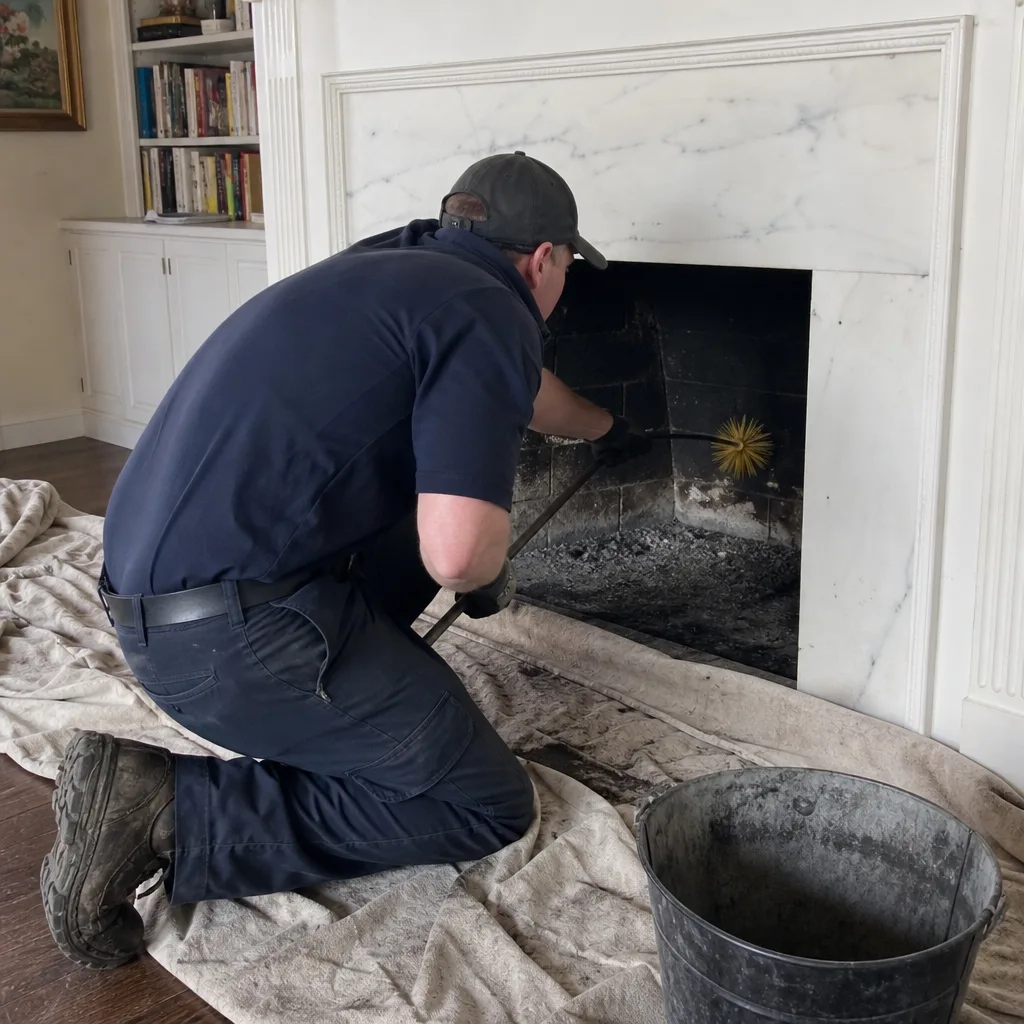
- Camera inspection and creosote classification before any tools come out. We run a NFPA 211 Level 2 camera down the full length of the flue liner. You see what we see – the liner condition, the deposit class, any cracks or gaps, the smoke chamber, the damper. We name what we find in plain terms. Only after we’ve classified the creosote stage do we write the price.
- Written price, written scope, written warranty – before work starts. Haven Standard Clause 1 – “Have it in writing” – is not a formality. The written price you approve is the price on the invoice. No surprises when we’re done, no verbal estimates that expand once a technician is inside your home.
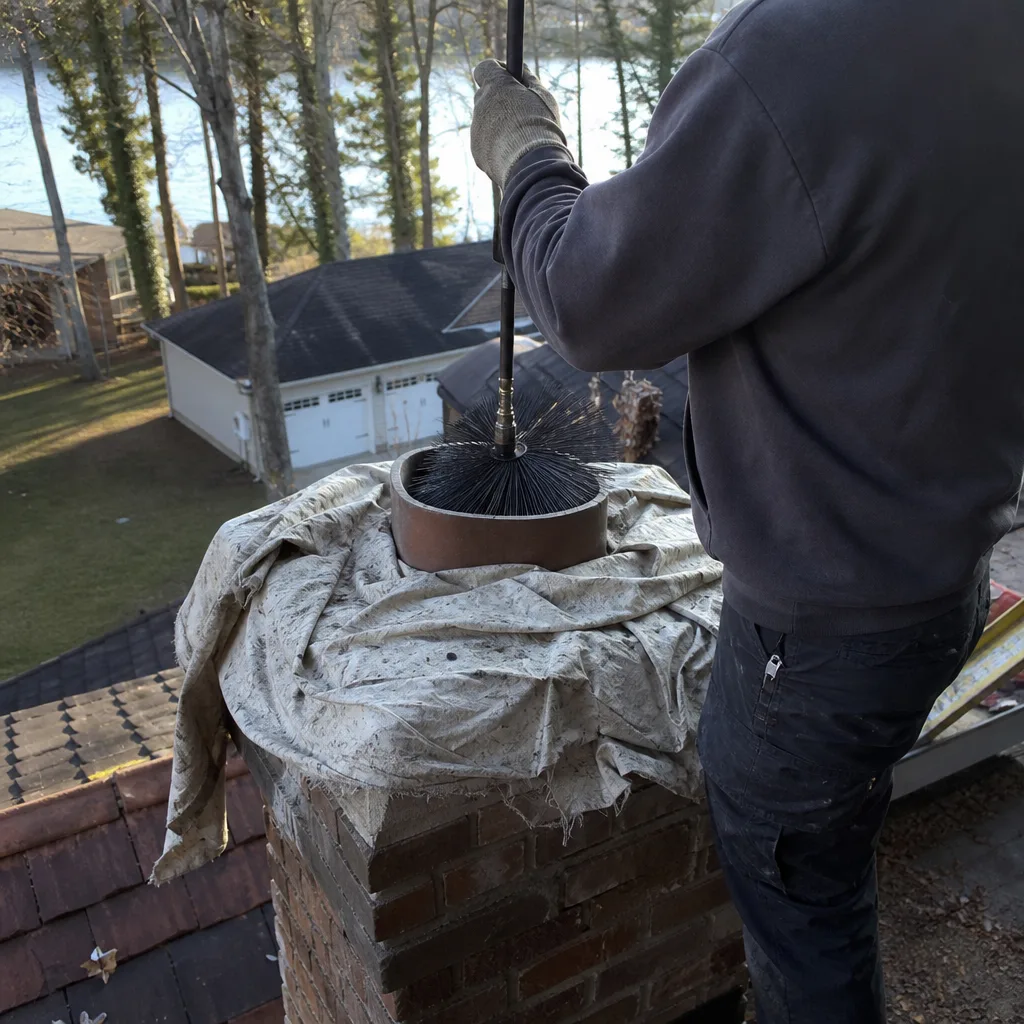
- Stage-appropriate removal method applied. Stage 1 and most Stage 2 deposits are removed with professional rotary brush systems – often using brushes and rods from Copperfield, which are sized precisely to the liner dimensions we confirmed in step one. Stage 3 glazed deposits get a chemical treatment applied first. The chemistry works by changing the physical structure of the glaze so it can be swept. We wait the required dwell time, then sweep. No shortcuts on dwell time – the product doesn’t work if you rush it.
- Smoke chamber and firebox inspection and cleaning. Creosote doesn’t only collect in the flue liner. The smoke chamber – the tapered section just above the firebox – is a common collection point, especially in older Annapolis homes with corbeled (unsmoothed) smoke chambers. We clean and document this area as part of the same visit.
- Post-removal camera pass and documented photo record. After cleaning, the camera goes back down. We confirm the liner is clear, check for any damage the creosote may have been masking – spalling brick, liner cracks, mortar joint failure – and photograph the post-clean condition. Haven Standard Clause 4 requires this documentation on every job. You receive the photo record as part of your job file.
- Plain-language written summary and next-step recommendations. If we found a Stage 2 or Stage 3 deposit, we note what contributed to it – wood type, burn habits, damper condition – so you can make changes. If the liner shows damage that needs repair, we tell you what it is, where it is, and what it will cost to fix, with photos to back it up. You decide what comes next.
Creosote Removal Pricing in Annapolis
Creosote removal in Annapolis runs $150 to $800 for the large majority of jobs. Here’s how that range breaks down:
| Creosote Stage | Typical Price Range (Annapolis) | What’s Included |
|---|---|---|
| Stage 1 (light, flaky deposits) | $150 – $279 | Single-visit brush sweep, camera pre- and post-inspection, photo record |
| Stage 2 (hardened or tar-like) | $280 – $450 | Rotary power sweep, extended time, camera inspection, photo record |
| Stage 3 (glazed, concentrated) | $450 – $800+ | Chemical treatment, dwell time, sweep, camera verification, photo record; may require second visit |
| Chemical treatment (add-on for Stage 2/3) | $75 – $150 per application | Applied as part of Stage 2/3 service when indicated by camera findings |
A few things affect where your job lands in those ranges:
- Flue height and liner dimensions. Taller homes in the Annapolis Historic District – some with 30-foot or taller chimneys – take more time to sweep and inspect than a standard two-story colonial in Parole.
- Number of flues. Many Annapolis homes have two or three flues in the same chimney stack serving different appliances. Each flue is priced separately.
- Liner material and condition. Clay tile liners and stainless steel liners (like those installed with DuraFlex systems) are swept differently. Damaged tile liners sometimes require additional care to avoid dislodging already-loose sections during the sweep.
- Access and damper condition. A frozen or broken damper can add time to a job. We note this before we start and include it in the written price.
The written price you get from us before the job starts is the price on your invoice. If you have a written estimate from another company, bring it – our Free Second Opinion is always available at no charge.
FAQs – Creosote Removal in Annapolis
How much does creosote removal cost in Annapolis?
Creosote removal in Annapolis costs between $150 and $800 for most jobs, with Stage 1 cleanings on the lower end and Stage 3 glazed-deposit treatment on the higher end. The price depends on the creosote class, your flue height, the number of flues, and whether chemical treatment is needed. Every job at Level Two Chimney Annapolis comes with a written price before work starts – call (443) 274-4231 for a specific written estimate on your chimney.
Can Stage 3 glazed creosote be removed without replacing the liner?
Yes, in most cases Stage 3 creosote can be removed without replacing the liner, using a chemical treatment that alters the deposit’s structure before sweeping. Whether liner replacement is also needed depends on what a Level 2 Inspection shows after the creosote is cleared – Stage 3 buildup sometimes masks liner damage (cracked tile joints, spalling sections) that wasn’t visible before. We’ll show you the post-clean camera footage and give you a straight answer on liner condition before recommending any additional work.
How often does a chimney in Annapolis need creosote removal?
NFPA 211 calls for annual inspection and cleaning for chimneys in regular use, and that’s the right baseline for Annapolis. Homes closer to the water – Hillsmere Shores, Bay Ridge, the Eastport waterfront – often burn more fires during the long Chesapeake shoulder season and can accumulate Stage 2 deposits within a single season if the wood isn’t fully seasoned. If you’re burning two or more cords a year, an annual cleaning is a minimum, not a suggestion.
Is it safe to use the fireplace if I know there’s creosote buildup?
Stage 1 deposits carry low ignition risk but should still be cleared before the next burning season. Stage 2 and Stage 3 deposits are a documented fire hazard – glazed Stage 3 creosote ignites at temperatures a normal fire can reach, and once it ignites inside the flue, temperatures can exceed 2,000 degrees Fahrenheit. The short answer: don’t use the fireplace until a Fireplace Cleaning inspection has classified the deposit and, if Stage 2 or 3 is present, the flue has been professionally cleaned. This is one of those situations where waiting is the actual risk.
Why Level Two Chimney Annapolis for Creosote Removal
Corrine Halstead built Level Two Chimney Annapolis on a simple premise: a camera down the flue and a written price before work starts shouldn’t be premium services. They should be the default. Since 2009, we’ve completed more than 38,000 chimney inspections and cleanings across the region, and every one of them included a documented photo record – years before insurers or regulators started asking for it. That practice is now Clause 4 of the Haven Standard, and it applies to every creosote removal we do in Annapolis.
Our technicians are background-checked and uniformed. You get a named tech assigned and a text when they’re on the way. When we’re done, you get photos, a written summary of what we found, and a 365-Day Done Right Promise in writing. If something wasn’t done right, we make it right – that’s not marketing language, it’s in the paperwork.
We also source materials through Haven’s buying network – including chemical treatment products and Copperfield brush systems – specifically to keep costs honest. When Stage 3 treatment is needed, you’re paying for the actual product and the time it takes, not a marked-up proprietary process.
For context on how creosote removal fits into a full chimney cleaning visit, see our overview of home services or go directly to the Chimney Cleaning & Sweep in Annapolis page, which covers what’s included in a standard sweep appointment and how the inspection process works from start to finish.
Key Takeaways
- Creosote removal in Annapolis costs $150 to $800 depending on the deposit class.
- Annapolis’s humid coastal climate and long shoulder burning season make Stage 2 buildup more common here than in many inland Maryland markets.
- A camera inspection classifies the deposit before any pricing is given – that’s non-negotiable at Level Two.
- Stage 3 glazed creosote requires chemical treatment, not just brushing – and it’s a fire hazard until removed.
- Every job includes a written price before work starts, a documented photo record when it’s done, and a 365-Day Done Right Promise.
- Corrine Halstead and the Level Two team have completed more than 38,000 chimney inspections and cleanings since 2009.
- A free second opinion on any written competitor estimate is always available.
Schedule a Creosote Inspection or Removal in Annapolis
If you’ve noticed a smoke smell, haven’t had a cleaning in over a year, or just bought a home in Annapolis without a chimney record, call us before the next fire. Corrine Halstead and the Level Two Chimney Annapolis team answer the phone live, 24 hours a day, 7 days a week – no voicemail, no web form required. We’ll set an appointment, tell you what we find, give you a written price, and do the work. In that order.
Call (443) 274-4231 to schedule your creosote inspection and get a written estimate at no charge.
Written by Corrine Halstead, Owner at Level Two Chimney Annapolis, serving Annapolis.