
Last updated September 20, 2026
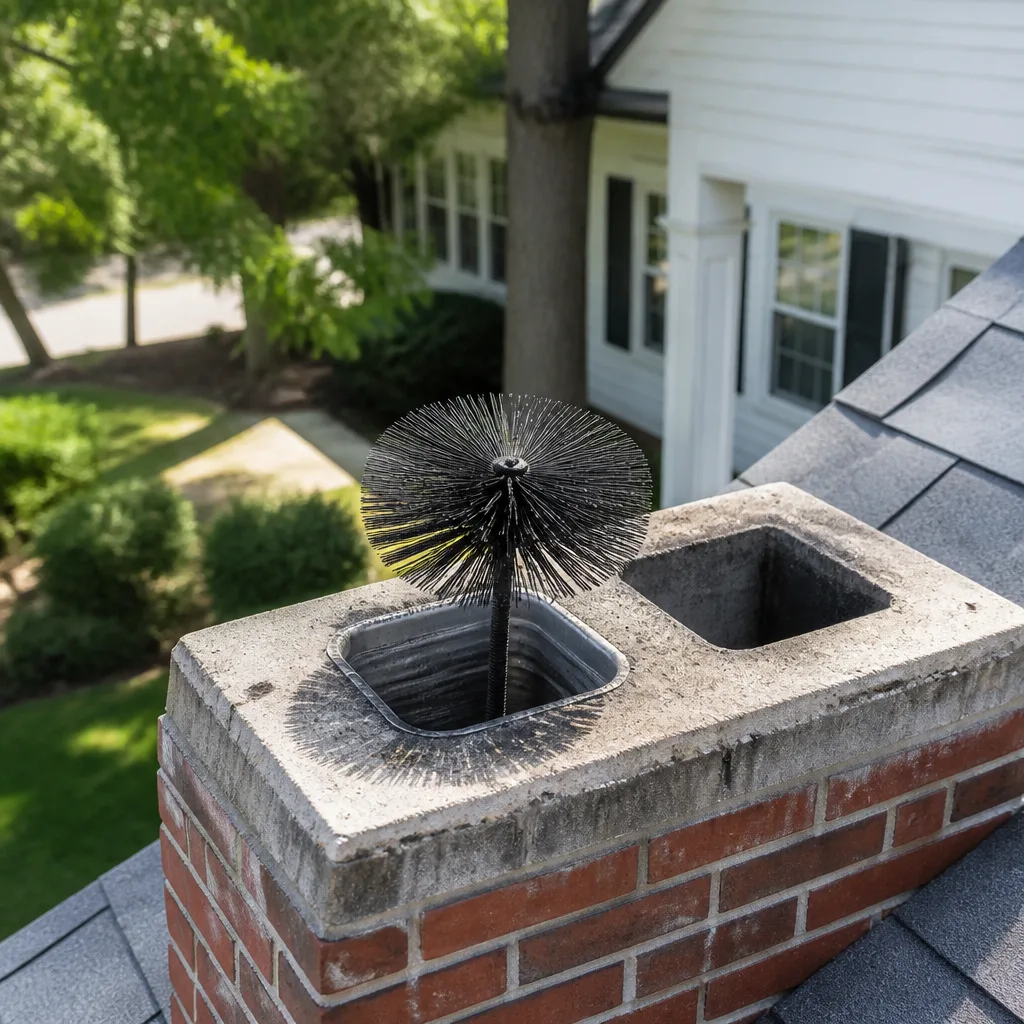
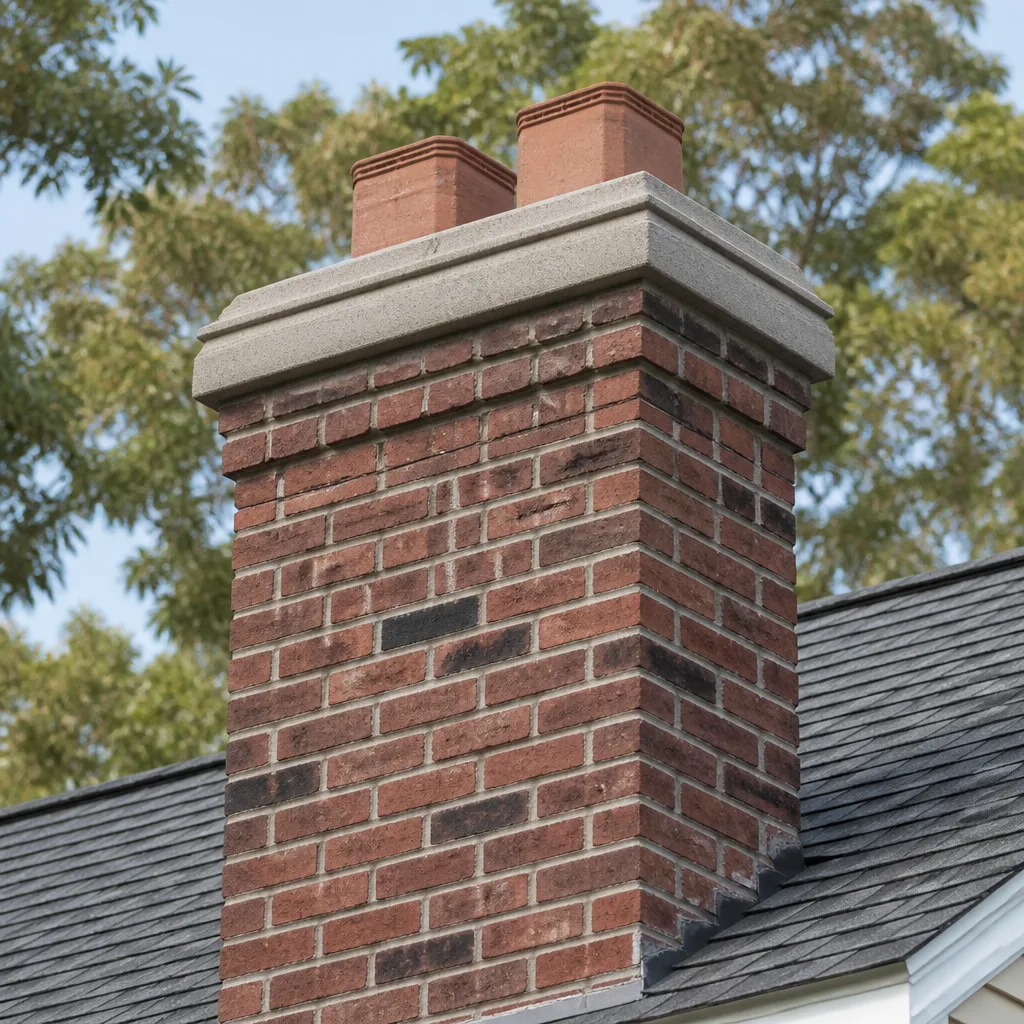
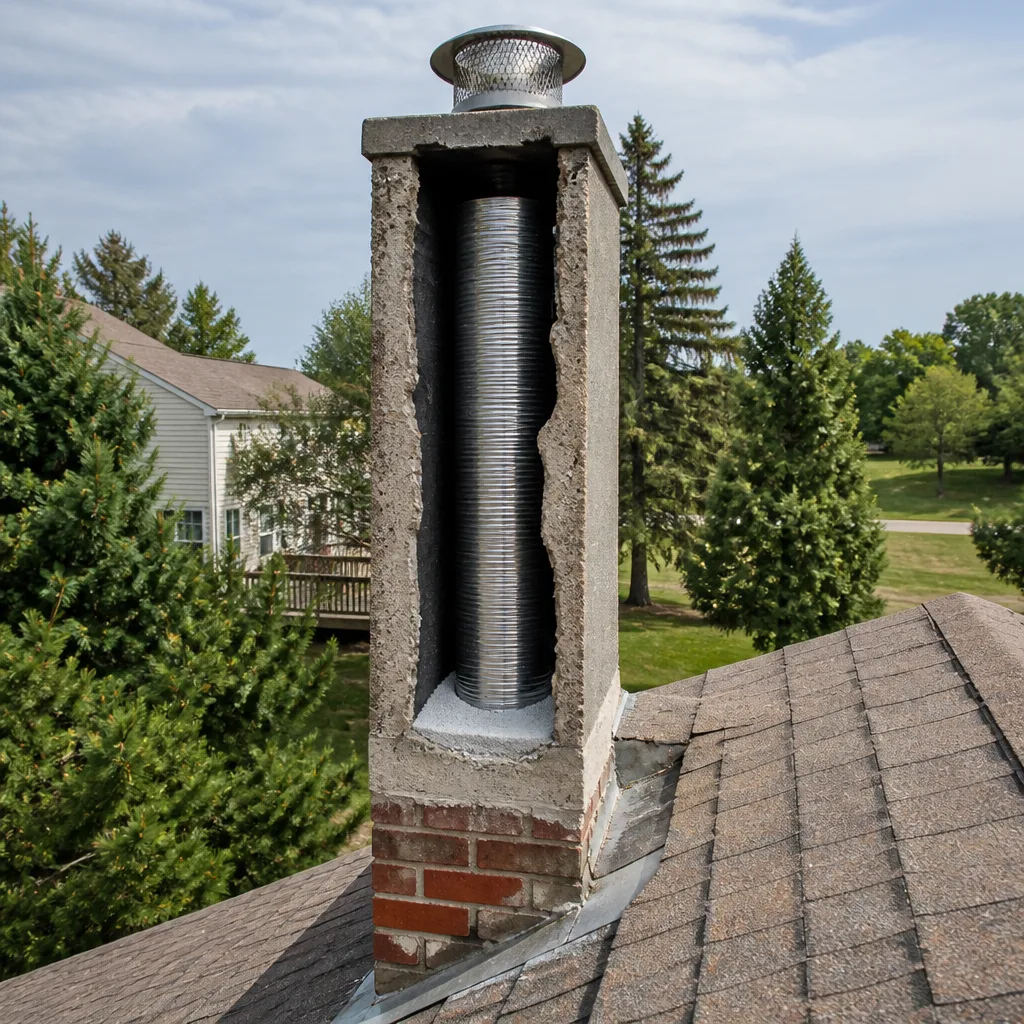
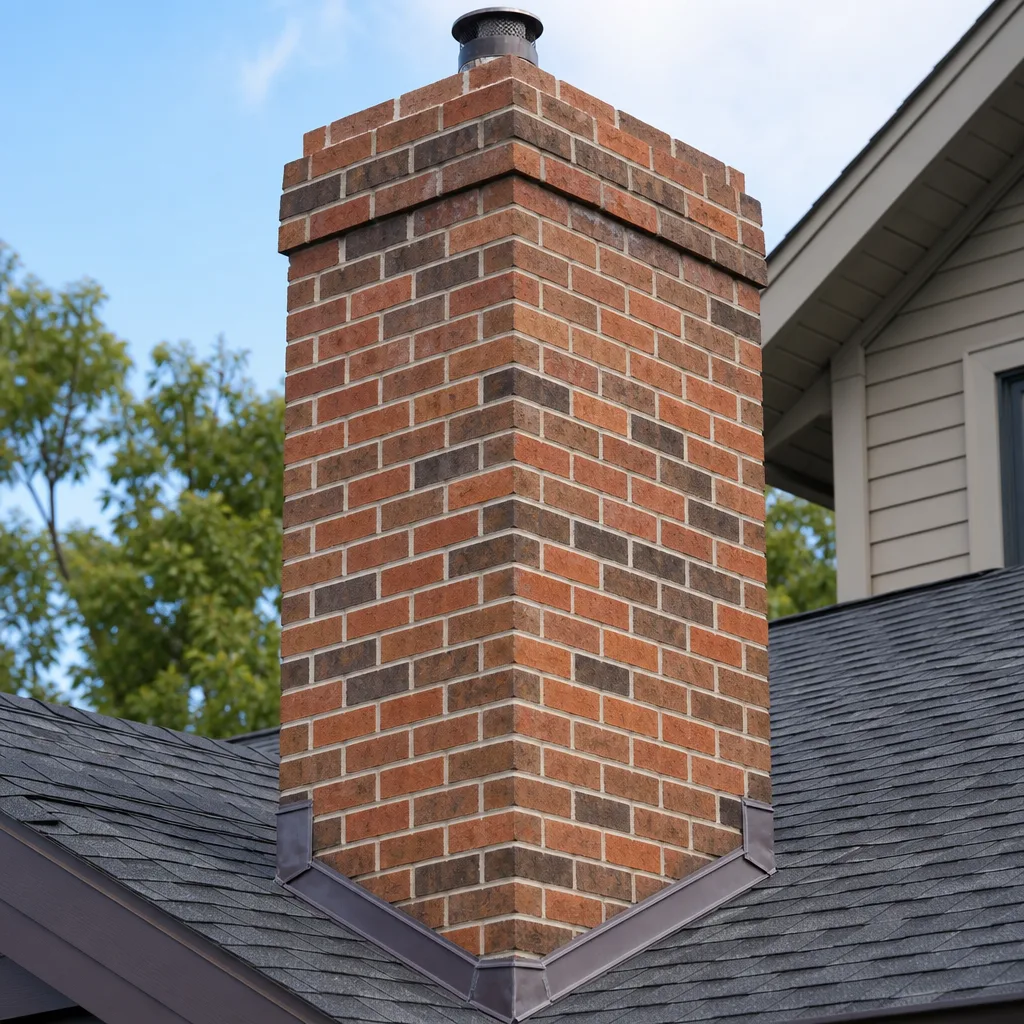
Level 1 sweep and inspection to the NFPA 211 annual standard - flue, crown, cap, and flashing checked and photographed
Chimney sweep logs do not sweep chimneys. They loosen some creosote - which then falls where a brush and vacuum still have to collect it.
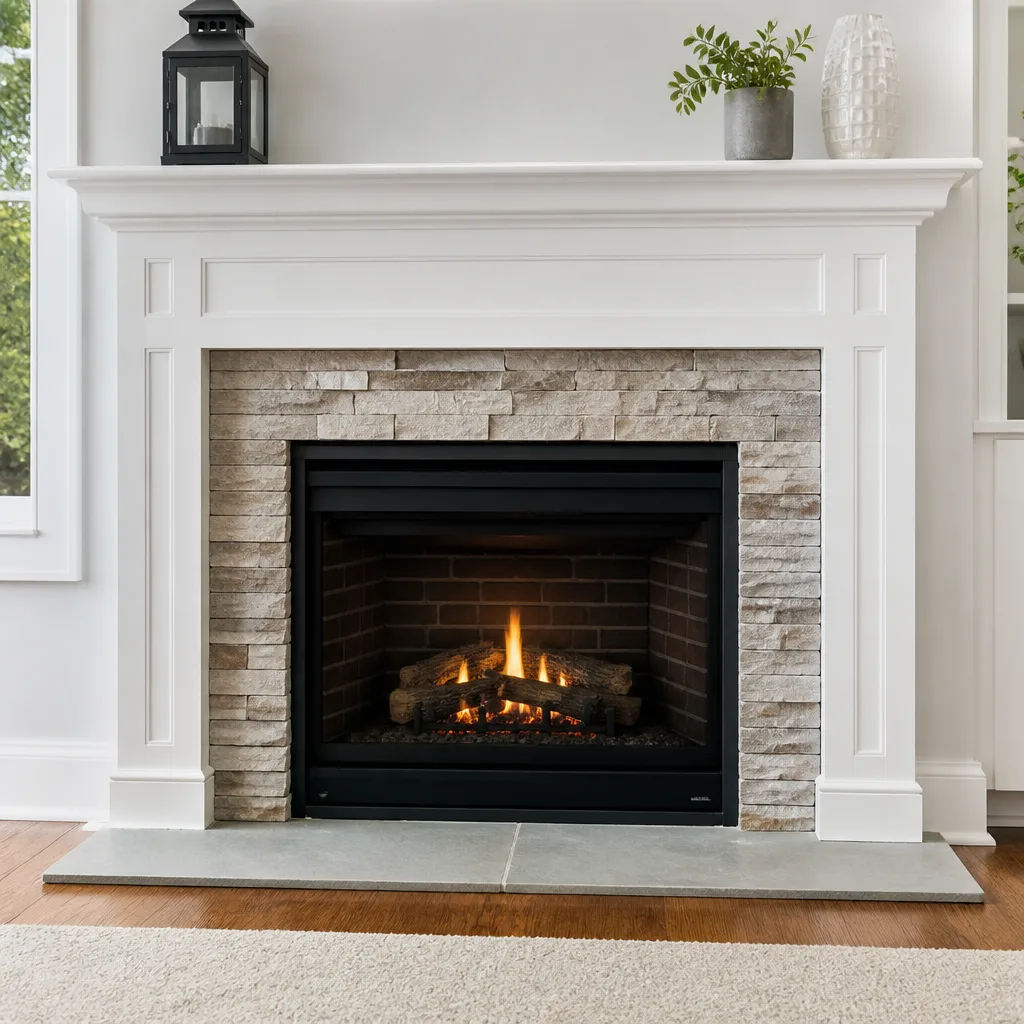
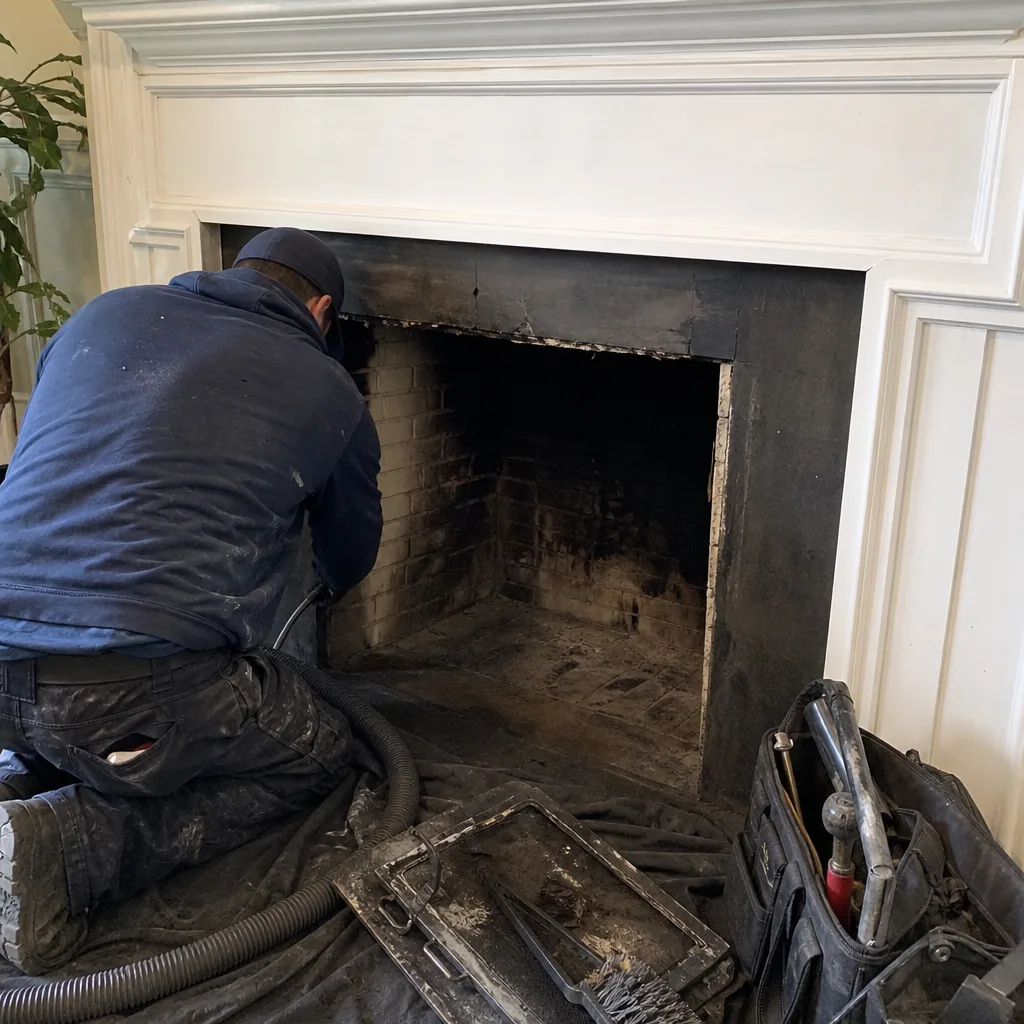 Before
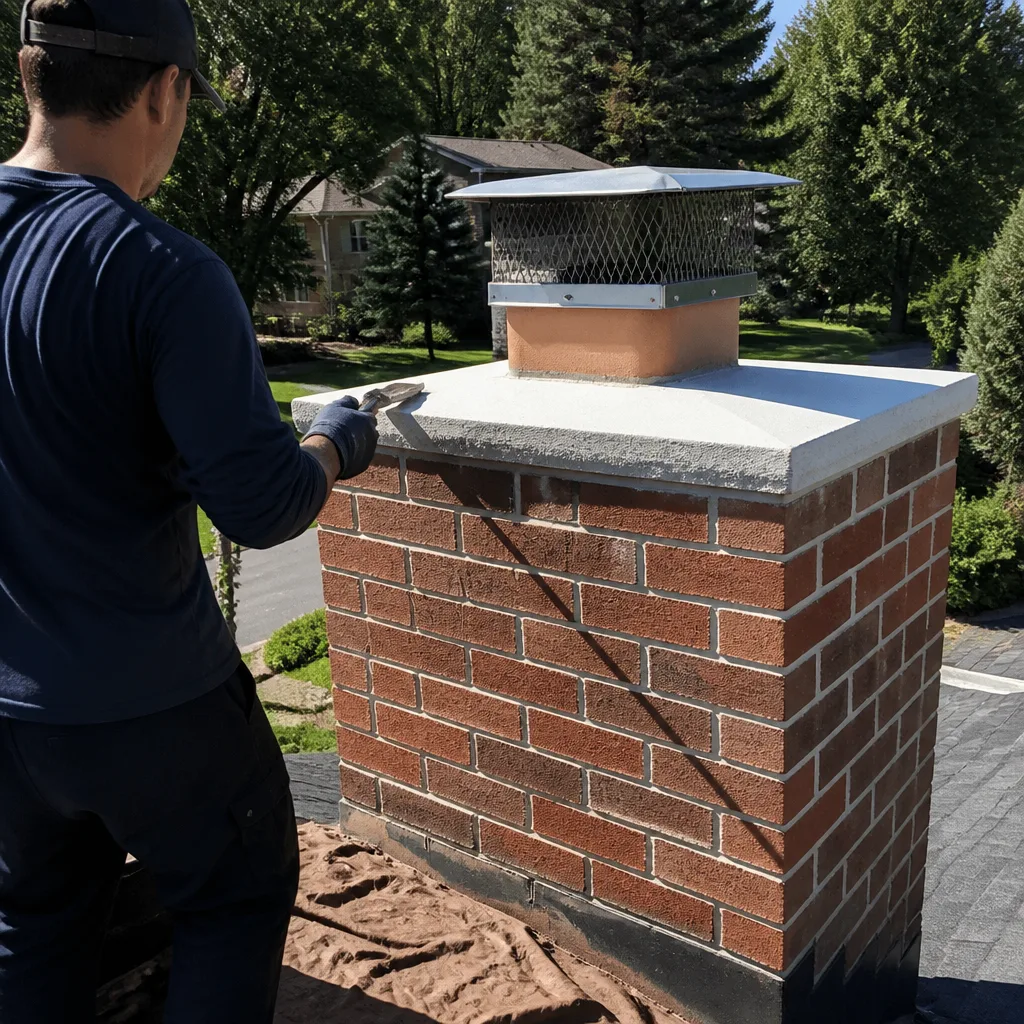 After
After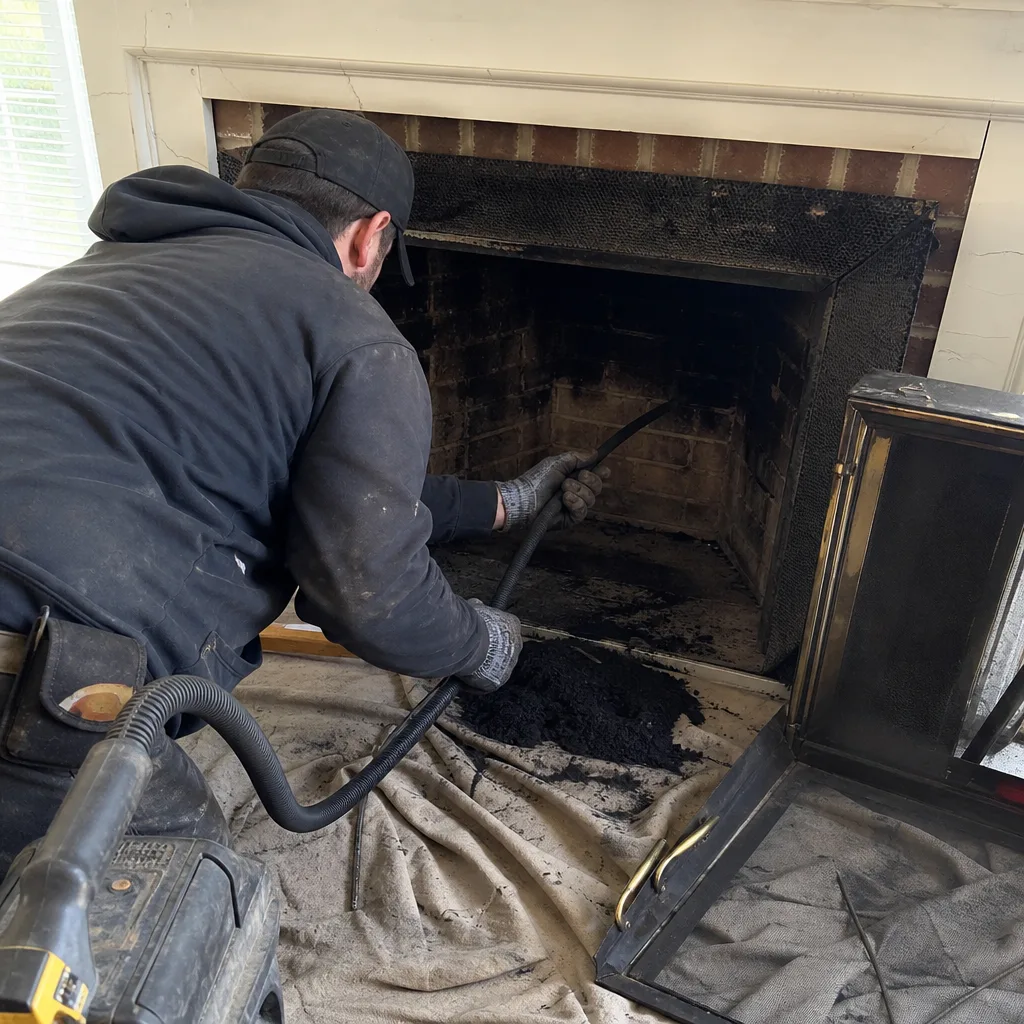 Before
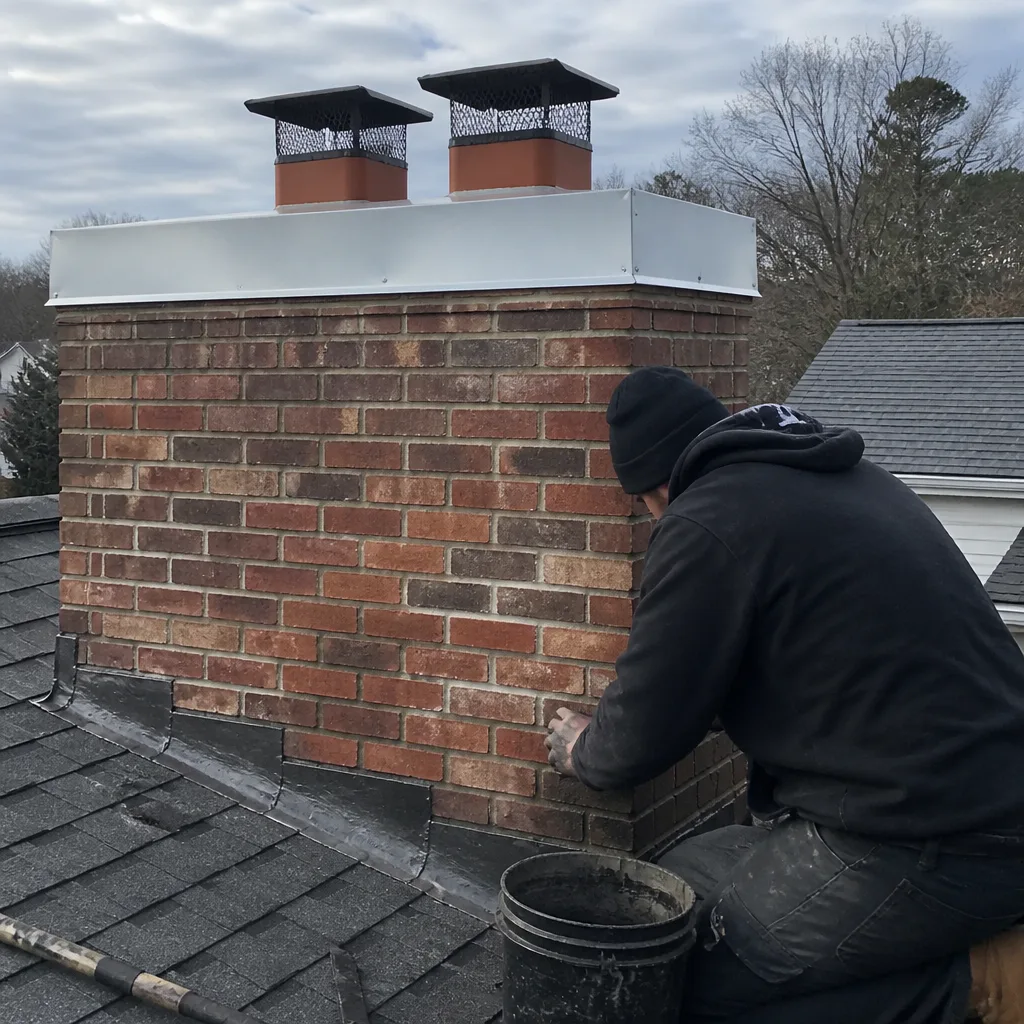 After
After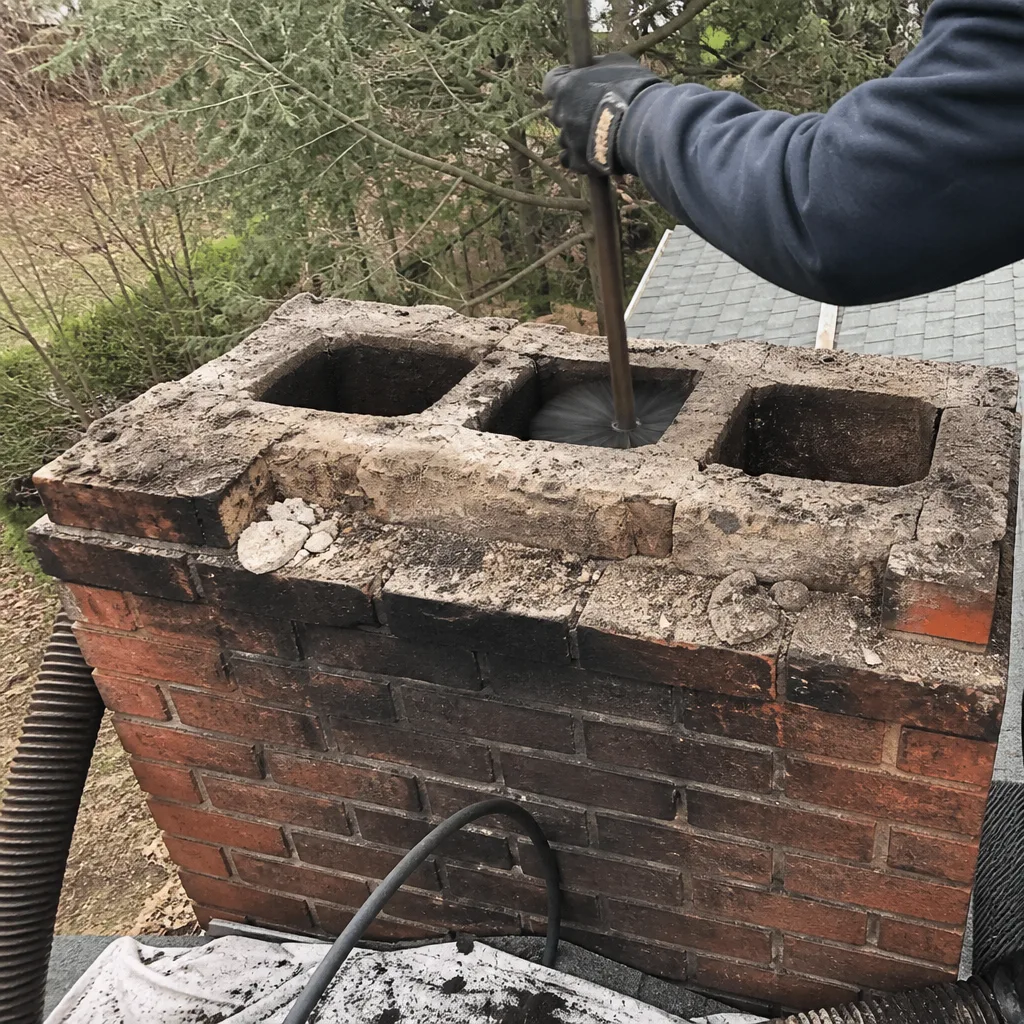 Before
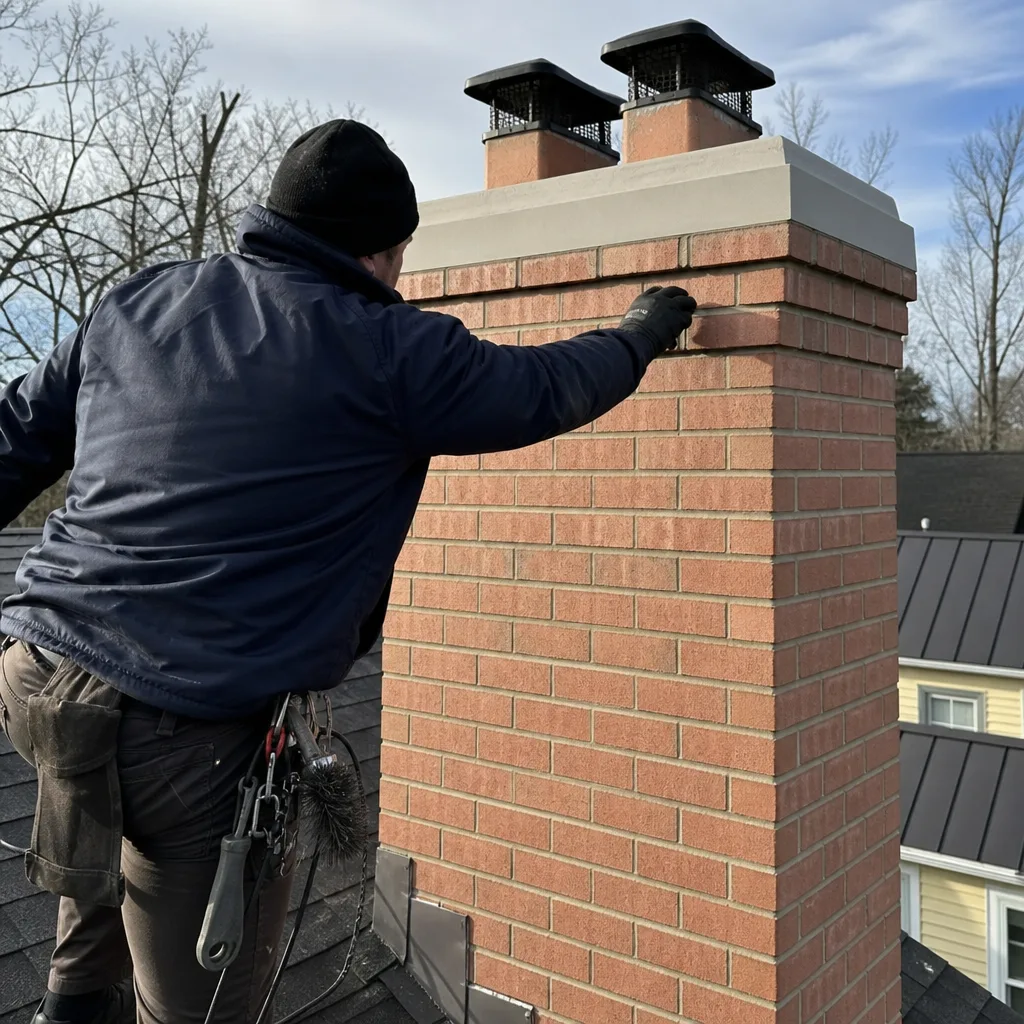 After
AfterChimney Cleaning Permits, Codes & Inspections in MD: What You Need to Know
Anne Arundel County has issued stop-work orders on chimney liner replacements where the homeowner had a signed contract, paid a deposit, and had no idea a permit was required – because the sweep never mentioned it. That is not a hypothetical. It happens in Annapolis neighborhoods every year, and it always costs the homeowner time and money they did not plan to spend. This guide maps exactly where the permit line falls in Maryland, what the code actually requires, and how a Level 2 inspection protects you from buying a problem at closing or discovering one after a fire. You will learn which chimney tasks are maintenance, which are alterations, and how to confirm a permit was pulled before you pay the final invoice.
Quick Answer
A basic chimney cleaning (sweep) does not require a permit anywhere in Maryland. But the repair work a cleaning often uncovers – warning signs that Annapolis homeowners should watch for like liner replacement, masonry rebuild, firebox reconstruction – almost always does. The line is simple: cleaning and inspection are maintenance; anything that alters the chimney structure or venting system is regulated work, and in Anne Arundel County specifically, that means a permit from the county before the work starts.
Table of Contents
- The Maryland Permit Trigger Map: Maintenance vs. Alteration
- Anne Arundel County Specifics: What Annapolis Homeowners Face
- NFPA 211 vs. the Building Code: Which One Governs?
- What a Level 2 Inspection Report Provides That a Sweep Receipt Doesn’t
- How to Confirm a Permit Was Pulled: The Anne Arundel County Lookup Process
- What Permit Work Actually Costs in Annapolis: Real Numbers
- When Insurers and Buyer’s Inspectors Ask for Documentation
- Common Mistakes to Avoid
BeforeAfterThe Maryland Permit Trigger Map: Maintenance vs. Alteration
Maryland adopts the International Residential Code (IRC) with amendments. The 2018 IRC, currently in force across most Maryland counties, draws a specific line between what it calls “ordinary repairs” and “alterations.” The distinction matters because the permit requirement flows from it, and understanding that line is the single most useful thing a Maryland homeowner can know about chimney work.
Ordinary repairs (no permit required anywhere in Maryland):
- Chimney sweeping and flue cleaning
- Level 1 visual inspection
- Level 2 camera-scan inspection (this is the standard we have performed on every job since 2009)
- Replacing a rain cap that is not attached to a liner system
- Sealing minor crown surface cracks (non-structural)
- Replacing a damper plate of the same size and type
Alterations (permit required in Anne Arundel County and most Maryland jurisdictions):
- Installing or replacing a flue liner (stainless steel or poured-in-place)
- Enlarging or changing the flue diameter
- Rebuilding any portion of the firebox or smoke chamber
- Replacing the chimney crown with a cast-in-place crown (not a surface patch)
- Tuckpointing that goes deeper than a single wythe of brick (structural work)
- Adding height to a chimney or rebuilding above the roofline
- Converting a wood-burning fireplace to gas logs and running a new vent
Here is what the sweep who wrote your invoice will not tell you, and what we say outright: a cleaning is often the first step in a repair conversation. If you call for a sweep in Annapolis and the technician finds a cracked liner, the next conversation is about replacement – something covered in our Chimney Cleaning & Sweep Maintenance Checklist for Annapolis Homeowners – and that conversation includes county permits whether the contractor mentions them or not.
The 2018 IRC Section R105.1 states that “any owner or authorized agent who intends to construct, enlarge, alter, repair, move, demolish, or change the occupancy of a building or structure” shall first obtain a permit. Section R105.2 then lists exemptions. Chimney sweeping does not appear as a construction activity. Liner replacement does. That is the entire map.
In our experience across Annapolis and Anne Arundel County, the most common permit violation is a stainless steel liner installed as a “relining” without a permit because the company called it maintenance. The county does not see it that way. When the work is discovered – usually during a resale inspection – the seller is ordered to either produce a permit retroactively or have the work re-inspected, and neither is free.
Anne Arundel County Specifics: What Annapolis Homeowners Face
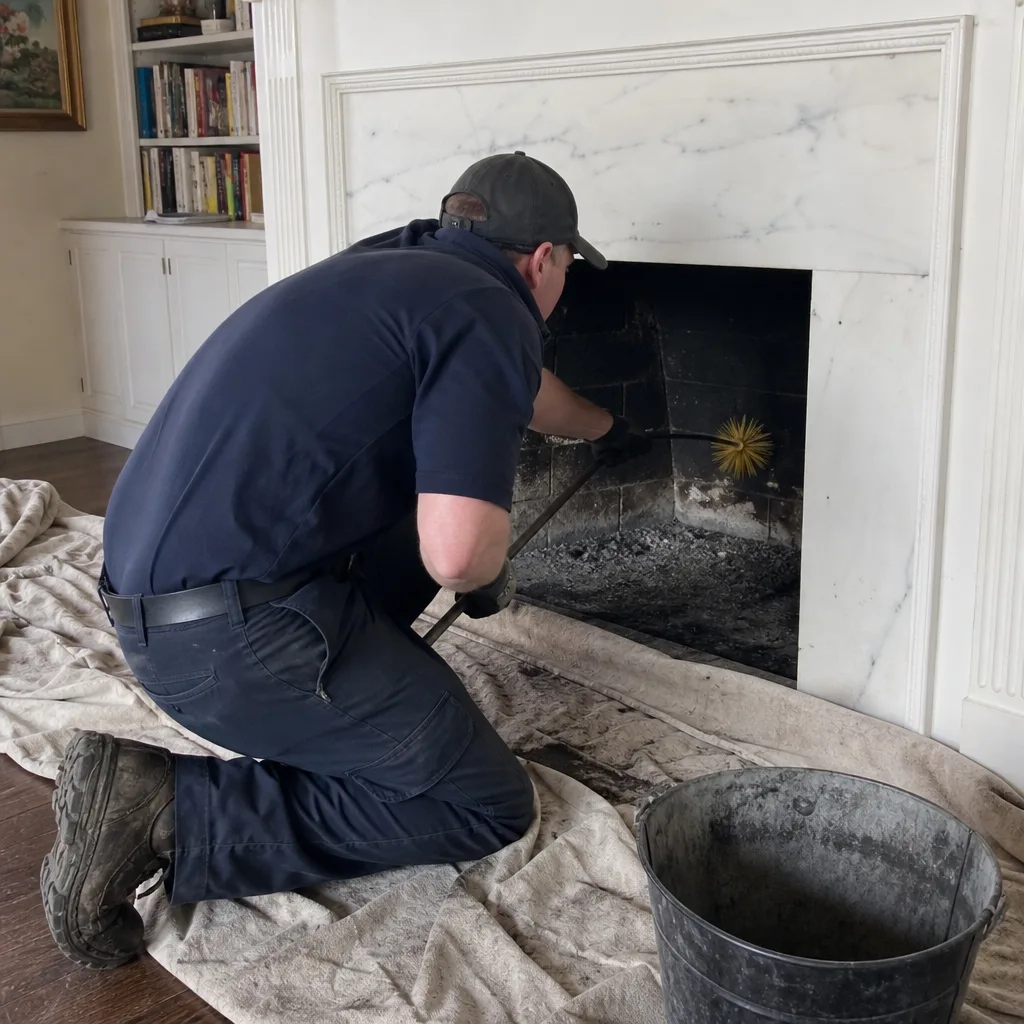
Anne Arundel County operates its own permitting office through the Department of Inspections and Permits, and it has local amendments that go beyond the state-adopted IRC. If you live in Annapolis city limits, you deal with the county, not a city building department, which simplifies the process but also means county inspectors review chimney work on everything from a rowhouse off West Street to a waterfront home on the Severn.
The county requires a permit for any chimney work that involves:
- Liner replacement – including rigid stainless and flexible relining systems. The county treats relining as a mechanical venting alteration, which means the permit is issued through the mechanical review path, not a simple trade permit.
- Masonry repair that exceeds 25 square feet – a patch job is maintenance. Rebuilding an entire chimney stack or replacing a firebox is not.
- Chimney cap or crown replacement when structural – a screw-on cap is maintenance. A cast-in-place crown that requires formwork and cures over two days is not.
- Any alteration to the flue serving a gas appliance – if a high-efficiency furnace is venting through a chimney chase and the liner is replaced, the county wants an inspection before the new liner goes into service.
The county also requires that all permit work be performed by a contractor with a valid Maryland Home Improvement Commission (MHIC) license. That license number must appear on the permit application, and the county cross-checks it against the MHIC database. We display our license information on every page of this site, not because it is required by law, but because our customers – homeowners who research before they call anyone – tell us it is one of the first things they verify.
Annapolis homeowners should also know that the Historic District has additional review layers if the property is in a designated historic zone. A chimney rebuild on a home in the Murray Hill or Wardour neighborhoods may require a Certificate of Approval from the Historic Preservation Commission before the county will even accept the permit application. We have seen that add four to six weeks to a project where the homeowner thought they were getting a two-day masonry patch.
The county’s inspection cadence for chimney work is typically two visits: a rough inspection while the flue interior is exposed (before the liner is dropped or the masonry is closed up), and a final inspection after the crown, cap, and firebox are restored. If the contractor does not schedule the rough inspection before closing up the chase, the county can require the work to be exposed again, at the contractor’s expense, not yours.
NFPA 211 vs. the Building Code: Which One Governs?
Here is a distinction almost no one explains clearly: NFPA 211 is not a law. It is a national standard published by the National Fire Protection Association, and it governs how chimneys are inspected, cleaned, and maintained. The building code – the IRC as adopted by Maryland and amended by Anne Arundel County – is law. It governs what may be built, altered, and occupied.
They interact in one specific, important way: when a dispute arises, an insurer or a buyer’s inspector will ask whether the chimney was maintained “in accordance with NFPA 211.” The building department will ask whether the alteration was performed “in accordance with the adopted building code.” You need both, and they answer different questions.
An example from our files in Annapolis: a homeowner off Bestgate Road had a stainless liner installed in 2019 without a county permit. The firing season that followed was fine. In 2023, they listed the home. The buyer’s inspector flagged the liner as unpermitted work, and the listing agent called us for a Level 2 camera scan. The liner itself was sound – NFPA 211-compliant, correctly sized, correctly installed. But the absence of a county permit nearly killed the sale. The seller had to open a retroactive permit with the county, pay a penalty, and schedule a county inspection before the buyer would close. The chimney was safe. The paperwork was not.
In a dispute with an insurer after a chimney fire, the insurer will almost always ask for the following: proof of annual or semi-annual sweeping, a documented inspection report that meets NFPA 211 Level 2 or Level 3 standards, and proof that any repairs were performed under a permit when a permit was required. Missing any one of those gives the insurer a reason to deny coverage for a fire that originated in the chimney system.
Our position since 2009 has been simple: every visit ends with a documented photo record, and every report states explicitly which inspection level was performed and what the camera showed. That practice became Clause 4 of the Haven Standard, and it is why insurers and real estate attorneys in Annapolis increasingly ask for our reports by name. Not because a law requires us to document that way, but because when you are in a dispute, a dated photo record of the flue interior is either worth its weight or its absence costs you everything.
What a Level 2 Inspection Report Provides That a Sweep Receipt Doesn’t
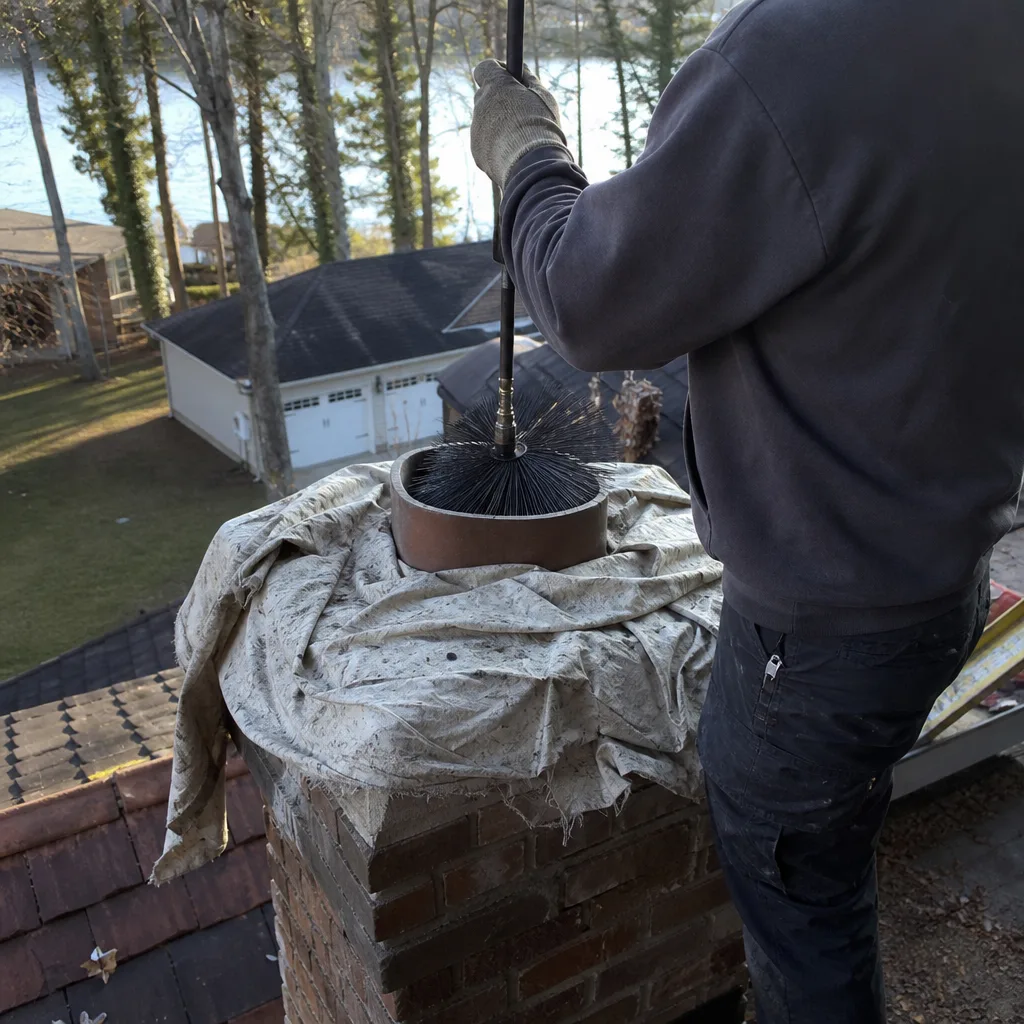
A standard chimney sweep receipt says: “Cleaned, capped, and inspected.” It tells you nothing about the condition of the flue liner, the smoke chamber, the crown, or the throat damper. A Level 2 inspection under NFPA 211 – the standard we perform on every visit, camera down the flue, before any work is quoted – produces a document that holds up in a real estate closing, an insurance claim, or a county code review.
Here is what a Level 2 report includes that a receipt never will:
- Photo documentation of the flue interior – full-length camera scan from the firebox to the termination, with date-stamped images showing liner condition, joints, and any gaps or cracks.
- Cleaning classification of creosote – first-, second-, or third-degree creosote (we say Class I, II, or III in our reports), which matters because Class III glazed creosote is a fire hazard that a simple sweep will not fully remove.
- Structural findings on the smoke chamber – the angled area above the firebox where most masonry defects hide, and where a camera scan is the only way to see spalling or missing parging.
- Crown and cap assessment – whether the crown is shedding water or absorbing it, and whether the cap is the right size for the flue tile.
- Clearance-to-combustibles verification – confirming that the chimney system meets the required air-space distances from framing, insulation, and roof sheathing.
- Written recommendation for any repair work, with the applicable permit requirement stated explicitly if the work requires one.
The practical difference in Annapolis: when a buyer’s home inspector flags a chimney as “needs further evaluation by a qualified chimney professional,” the seller has about ten days to produce a credible response. A sweep receipt that says “chimney is fine” does not satisfy that request. A Level 2 report with camera photos and a written condition assessment does, and it often keeps the sale on schedule. We have walked into that exact scenario more times than we can count, and the homeowners who already had a Level 2 report on file closed without delay.
How to Confirm a Permit Was Pulled: The Anne Arundel County Lookup Process
If you bought a home in Annapolis and want to confirm that prior chimney work was permitted, or if you are about to hire a contractor and want to verify that they actually pulled the permit they said they would, the process is straightforward.
- Go to the Anne Arundel County Department of Inspections and Permits online portal. The county maintains a searchable database of permits by address. You do not need to create an account to search.
- Enter your property address exactly as it appears on your tax record. The database is address-driven, not name-driven. If the permit was pulled under a previous owner’s name, it will still appear under the property address.
- Look for any permit with a description that includes “chimney,” “liner,” “flue,” “fireplace,” or “masonry.” The county’s permit types are broad, so a liner replacement may be filed under “mechanical” or “alteration.”
- If you find a permit, check the status. “Issued” means it was pulled but the final inspection may not have been completed. “Finaled” or “Closed” means the county inspected and approved the work. “Expired” means the permit was pulled but the work was either not completed or not inspected within the required window.
- If you find nothing and you have reason to believe work was done, call the county directly. The permit office can run a manual search, and they can also tell you whether the address has any open code enforcement actions.
What if a prior contractor skipped the permit? The homeowner owns the problem, not the contractor. You may be able to file a complaint with the Maryland Home Improvement Commission if the contractor was unlicensed, but the county’s position is that the current property owner is responsible for bringing the work into compliance. That typically means hiring a licensed chimney company to perform a Level 2 inspection, documenting the current condition, and then applying for a retroactive permit if the county permits it. The county charges a penalty fee for retroactive permits, which is a fraction of the cost of tearing out and redoing the work.
We keep a running archive of every inspection and cleaning we have performed since 2009 – a documented photo record for every job, stored and retrievable by address. When an Annapolis homeowner calls us because a sale is stalled on an unpermitted liner, the first question we ask is whether we performed any prior work at that address. More than once, our archive has produced the photos that satisfied a buyer’s inspector and kept a closing on schedule.
What Permit Work Actually Costs in Annapolis: Real Numbers
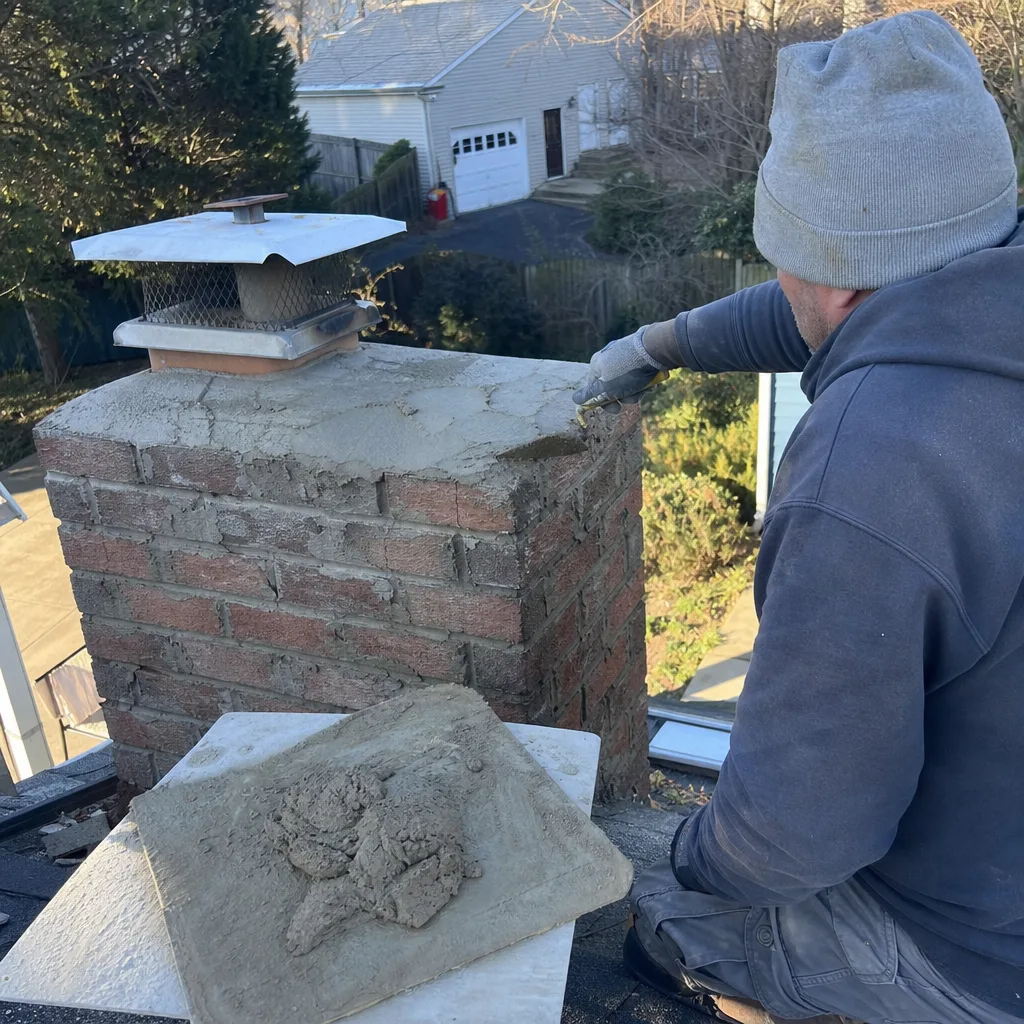
We believe in naming the price range on the page. Here is what chimney work actually costs in the Annapolis market, including the permit fees where they apply. These are the numbers our customers see, in writing, before any work starts.
| Service | Typical Cost in Annapolis | Permit Required? | Permit Fee (Approx.) |
|---|---|---|---|
| Chimney sweep and Level 1 visual inspection | $180 – $275 | No | N/A |
| Level 2 camera-scan inspection (included on every visit) | $275 – $390 | No | N/A |
| Stainless steel liner installation (DuraFlex or Olympia Chimney systems) | $2,800 – $4,600 | Yes | $85 – $150 |
| Chimney crown replacement (cast-in-place) | $900 – $1,700 | Yes (structural) | $65 – $110 |
| Firebox rebuild with new hearth | $2,200 – $4,000 | Yes | $85 – $150 |
| Tuckpointing (non-structural, under 25 sq ft) | $450 – $900 | No | N/A |
| Chimney cap replacement (screw-on, matching existing) | $250 – $500 | No | N/A |
These are not “call for pricing” placeholder numbers. They are the ranges we quote from, in writing, before any work begins. Clause 1 of the Haven Standard requires a written price, written scope, and written warranty delivered before anyone starts – not after the tech is already in your home. If you bring us a competitor’s written quote for the same work, we will give you a free second opinion. That is not a promotion. It is a standing practice, and it has been since 2009.
Two notes on the numbers above. First, liner costs in Annapolis run at the higher end of the national range because many homes here are older construction with flue tiles that are no longer manufactured, which forces a custom fit. Second, the permit fee itself is small relative to the cost of the work. The expensive problem is never the permit fee – it is the stop-work order, the retroactive permit penalty, or the tear-out when an inspector finds work that was never inspected in the first place.
When Insurers and Buyer’s Inspectors Ask for Documentation
The moment you are dealing with an insurance claim or a real estate transaction in Annapolis, the documentation standard changes. A sweep receipt is not enough. Here is what actually happens in each scenario, based on what we have seen across 38,000 inspections and cleanings in the Annapolis area since 2009.
Insurance claim after a chimney fire: the adjuster will ask for proof of regular chimney maintenance, which means dated sweep records. If you cannot produce them, the claim is at risk. They will also ask whether the chimney had any known defects, and if you had a Level 2 inspection that documented a cracked liner and did not address it, the insurer will likely deny the claim on the grounds that the loss was foreseeable. The documentation you have – or do not have – determines the outcome.
Buyer’s home inspection: as noted earlier, a buyer’s inspector in Annapolis will frequently write “chimney requires evaluation by a qualified professional” on the report. At that point, the seller has a limited window to respond. A homeowner who can produce a recent Level 2 report with camera photos answers the objection immediately. A homeowner with only a receipt from a sweep has a problem: the buyer’s agent will still want the qualified professional evaluation, and the clock is ticking.
Unpermitted prior work discovered at closing: this is the increasingly common scenario. Title searches now routinely include permit history, and mortgage underwriters are flagging unpermitted chimney work, particularly liner replacements and fireplace conversions. The fix almost always involves a retrofit inspection by a qualified chimney professional, a retroactive permit, and often a repair to whatever the county inspector finds. The cost lands on the seller, and it is always more expensive at closing than it would have been at the time of the original work.
Our advice to every Annapolis homeowner is the same: treat chimney documentation like you treat the title search. For more guides & resources, visit our blog. Keep the records. File the photos. Know whether the work was permitted. When the problem arrives, it is always late, and the homeowners who can produce the file walk away clean.
Common Mistakes to Avoid
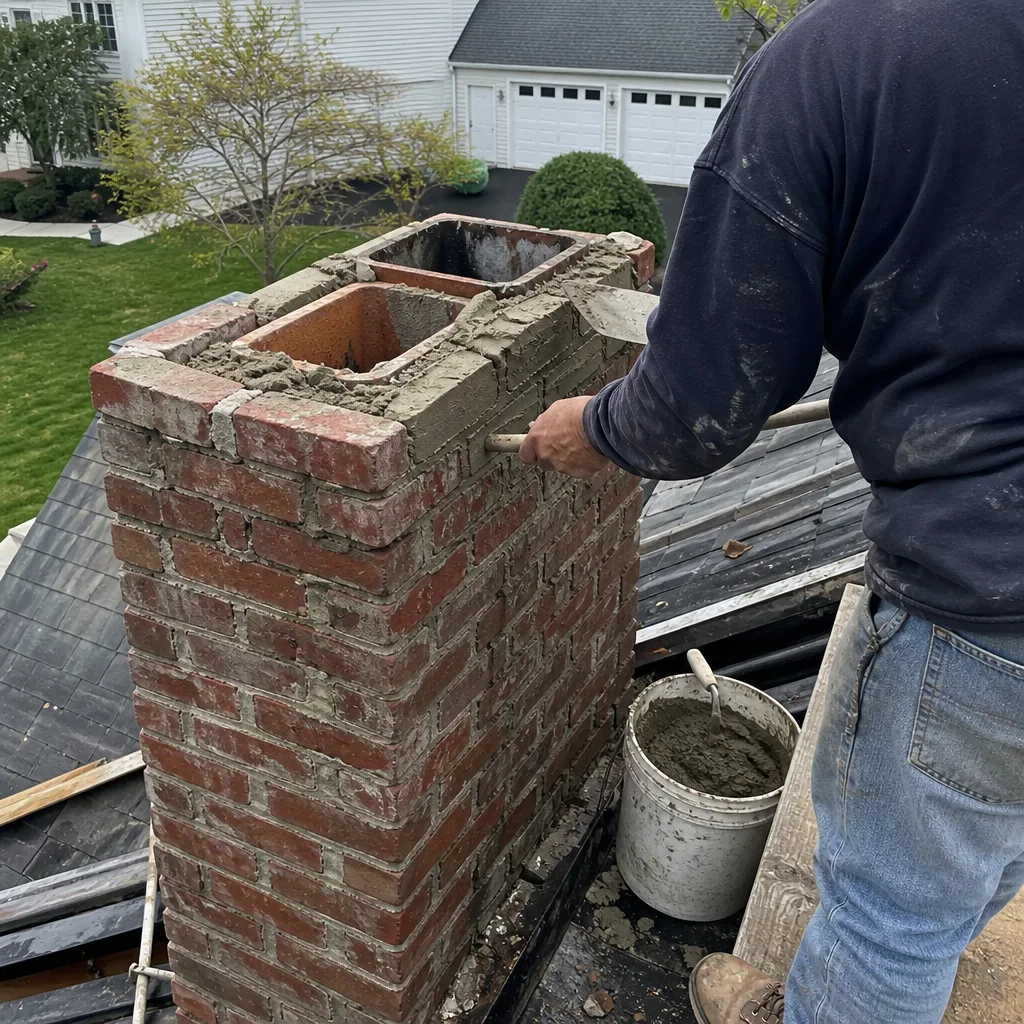
- Believing the sweep when they say “no permit needed” for a liner. Liner replacement is an alteration under the 2018 IRC as adopted by Maryland. Anne Arundel County requires a permit. If the contractor will not pull one, find another contractor.
- Paying in full before the final inspection is signed off. The county’s final inspection is the moment the work becomes legal. Until that inspection is closed, hold back the final payment. Reputable contractors in Annapolis expect this.
- Treating a sweep receipt as an inspection report. It is proof of cleaning. It is not a condition assessment. If you are buying, selling, or filing a claim, you need a Level 2 report with photos.
- Waiting until the listing agent asks. If you know the chimney liner was replaced before you bought the home, run the permit lookup now, not three days before closing. The retroactive permit process takes weeks in Anne Arundel County.
- Assuming the Historic District review does not apply. If you are in the Annapolis Historic District, a chimney rebuild above the roofline may require Preservation Commission review before the county will accept the permit. Do not let a contractor start masonry work without confirming this.
- Hiring an unlicensed contractor to save money. The county will not issue a permit to an unlicensed contractor, which means the work will be unpermitted from day one, and you will own every consequence. Check the MHIC license before signing anything.
When to Call a Professional
If you have a chimney in Annapolis and you have not seen the inside of it with a camera in the last two years, that is the threshold. A visual check from the ground tells you almost nothing about the flue liner, the smoke chamber, or the crown. The second threshold: if you are buying or selling, the contract will force the question anyway, and you would rather have the report before the other party does. The third: if you are burning wood regularly and have not had the flue swept this season, schedule it now – before the cold months, not during them, when every sweep in Anne Arundel County is booked out. Level Two Chimney Annapolis offers free estimates in Annapolis – call (443) 274-4231. Our technicians are background-checked, uniformed, and assigned by name before the visit, with a text when they are on the way. Every job ends with a written report and a photo record, whether it is a simple sweep or a full liner replacement.
Frequently Asked Questions
No. A chimney sweep, a visual inspection, and a camera-scan inspection are all maintenance activities and do not require a permit anywhere in Maryland, including Anne Arundel County. The permit requirement kicks in when the work alters the chimney, which means liner replacement, masonry rebuild, or structural crown work.
In the Annapolis market, a sweep with a Level 1 visual inspection typically runs $180 to $275. A Level 2 camera-scan inspection, which we perform on every visit and which includes the documented photo record, runs $275 to $390. These are written prices delivered before any work starts, never after the tech is in your home. Call (443) 274-4231 for an exact quote – estimates are free.
You carry the risk, not the contractor. If the unpermitted work is discovered – typically at resale or during an insurance claim – you will be required to open a retroactive permit, pay a penalty, and have the work inspected by Anne Arundel County. If the inspector finds defects, you may be required to tear out and redo the work at your own expense. The permit fee is a fraction of that cost.
Search the Anne Arundel County Department of Inspections and Permits online database by your property address. Look for any permit with “chimney,” “liner,” “flue,” or “masonry” in the description. If the work was done but no permit appears, call the county permit office directly for a manual search.
A Level 2 inspection under NFPA 211 is a camera-scan of the flue interior from the firebox to the top of the chimney, combined with a structural assessment of the accessible portions of the chimney. It is the standard we have performed on every job since 2009, and it produces a documented photo record that is accepted by insurers, buyer’s inspectors, and county reviewers. A sweep receipt is not a substitute.
It depends on the cap. A screw-on rain cap that matches the existing flue tile is maintenance and requires no permit. A structural crown replacement, or a cap integrated with a new liner system, is an alteration and requires a permit in Anne Arundel County. If you are unsure, we can tell you during the inspection before you spend anything.
The Bottom Line
Chimney cleaning in Maryland is a maintenance activity with no permit requirement – that is the easy answer. For a deeper look, see The Complete Guide to Chimney Cleaning in Annapolis. The hard answer is that the work a cleaning uncovers usually is not, and the distinction is where homeowners get hurt. Liner replacements, masonry rebuilds, and structural crown work all require a permit in Anne Arundel County, and the sweep who will not say so is not saving you money, they are transferring risk to your name. Get the Level 2 inspection, get the photos, confirm the permit, and keep the file. When the closing or the insurance claim arrives, you will be the one with the answers instead of the one with the problem.
For a free estimate on any chimney service in Annapolis – cleaning, inspection, repair, or liner work – call Level Two Chimney Annapolis at (443) 274-4231. Written price before any work starts. Documented photo record when it is done. That is the standard, and it has been since 2009. See our Level Two Chimney Annapolis home page for more on how we work, or read about our Chimney Cleaning & Sweep in Annapolis service, Chimney Repair in Annapolis, and Fireplace Services in Annapolis for specifics on each.
Written by Corrine Halstead, Owner at Level Two Chimney Annapolis, serving Annapolis since 2009.