
Last updated September 20, 2026
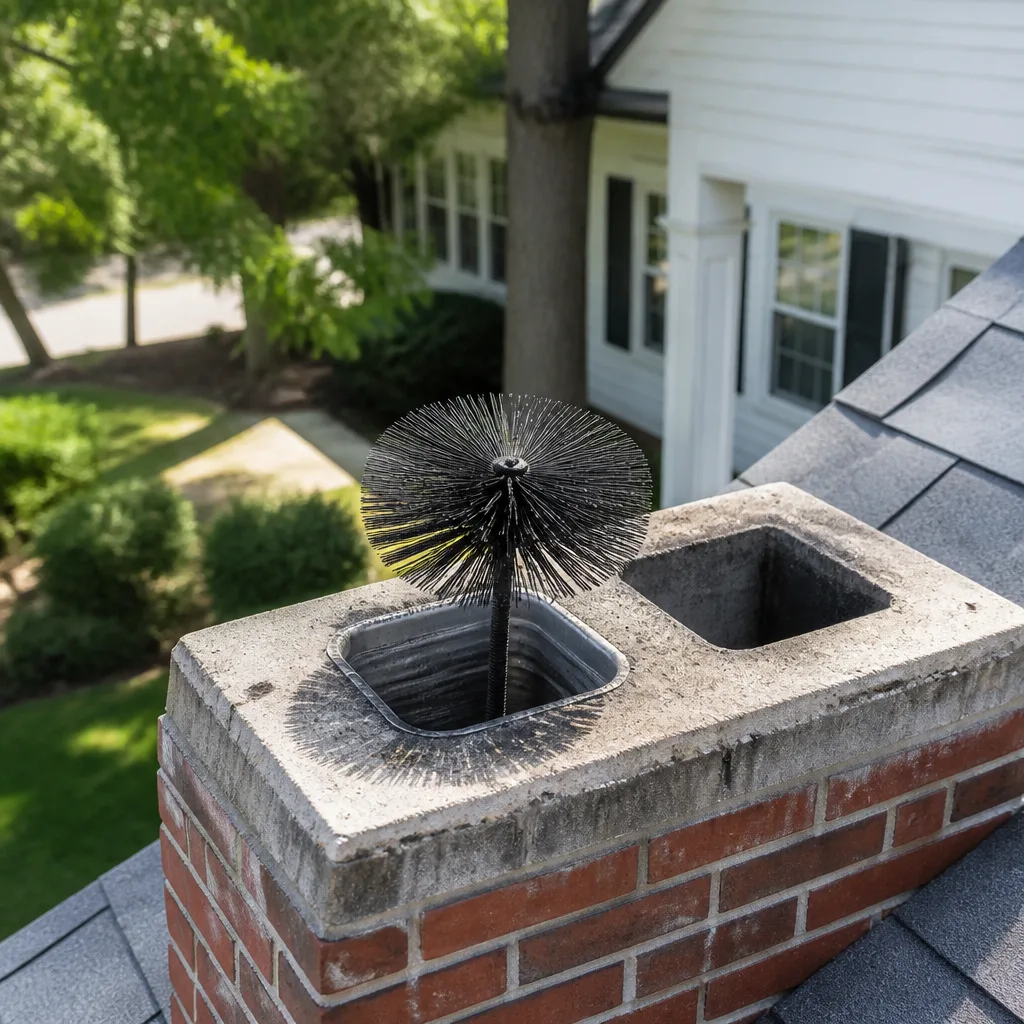
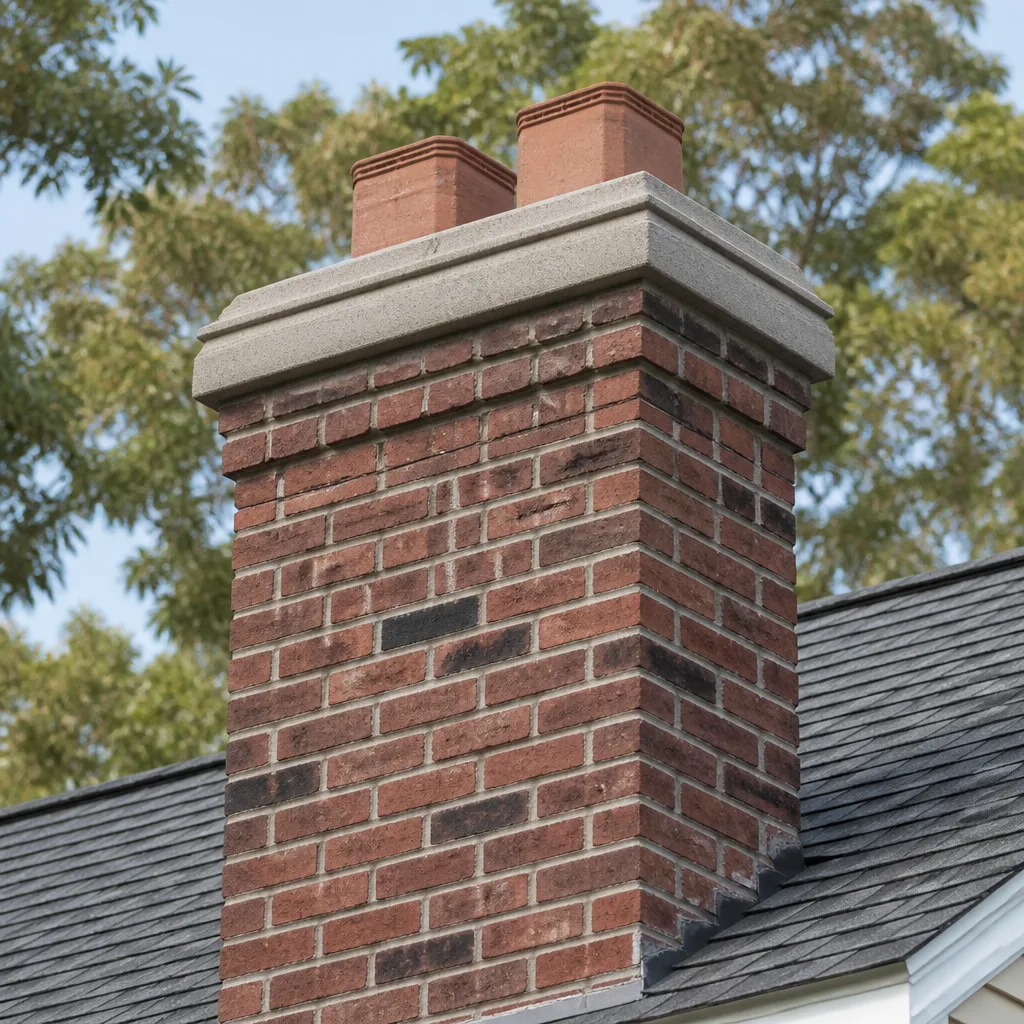
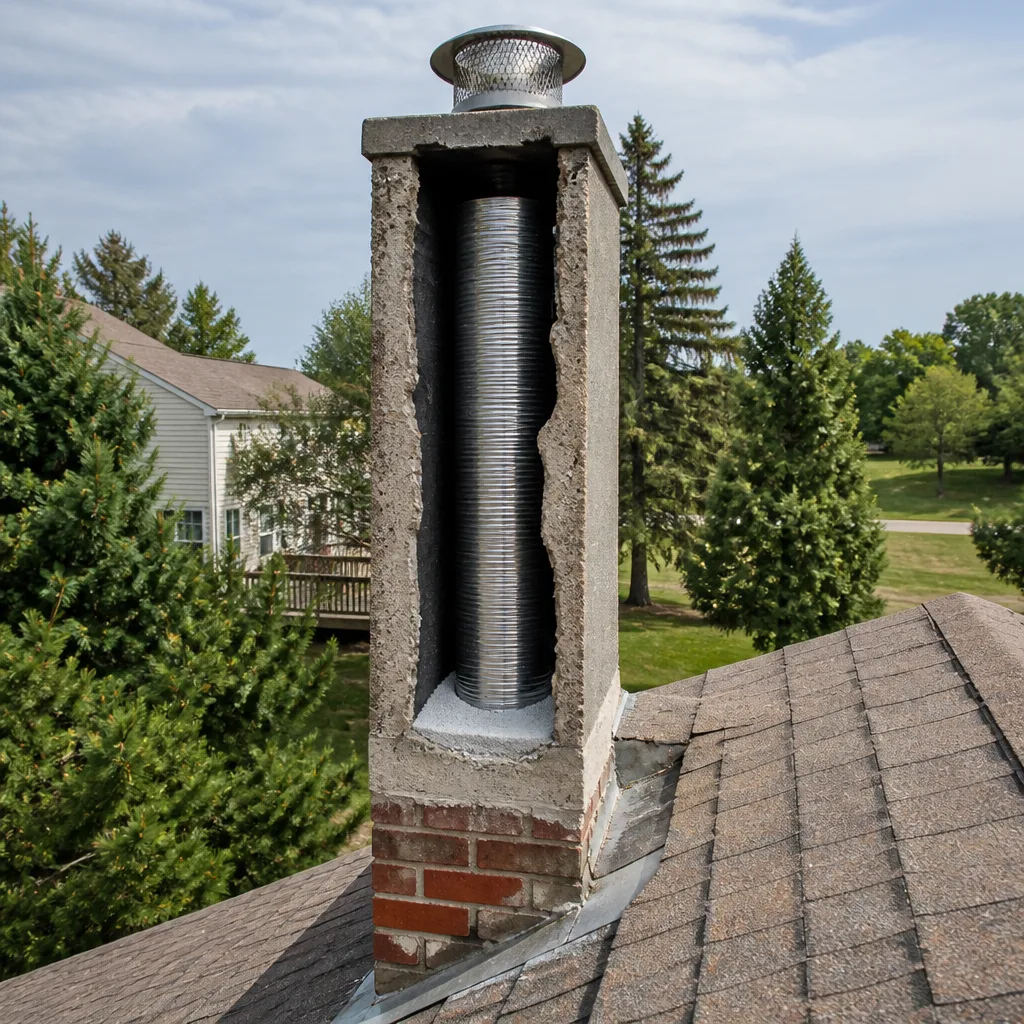
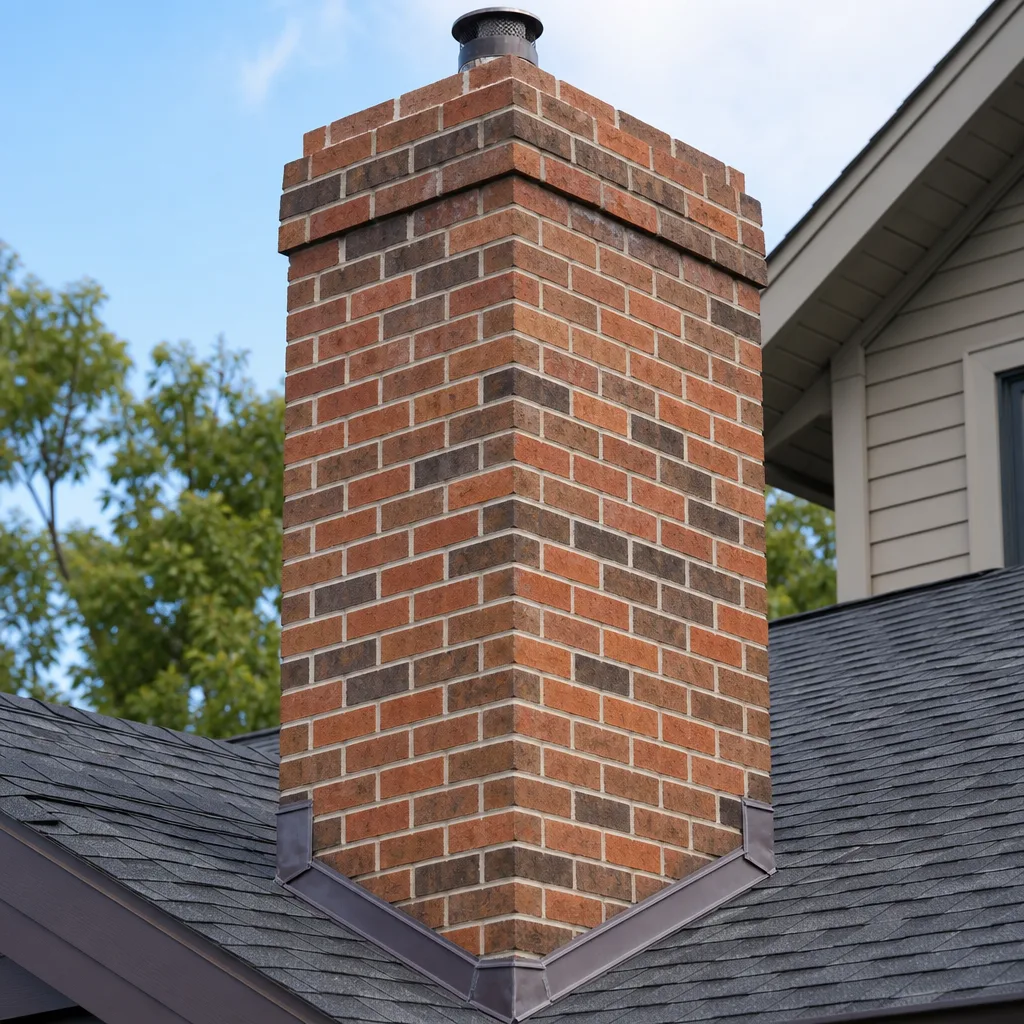
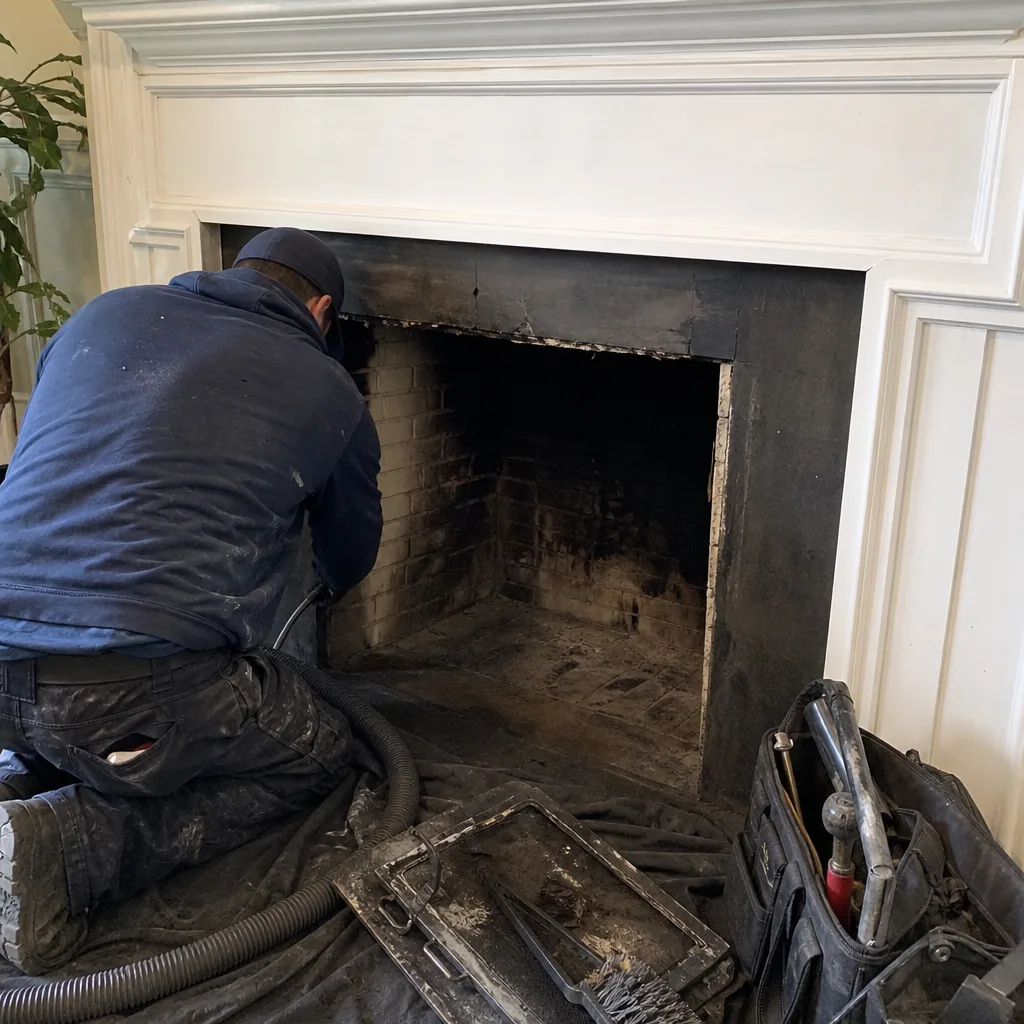
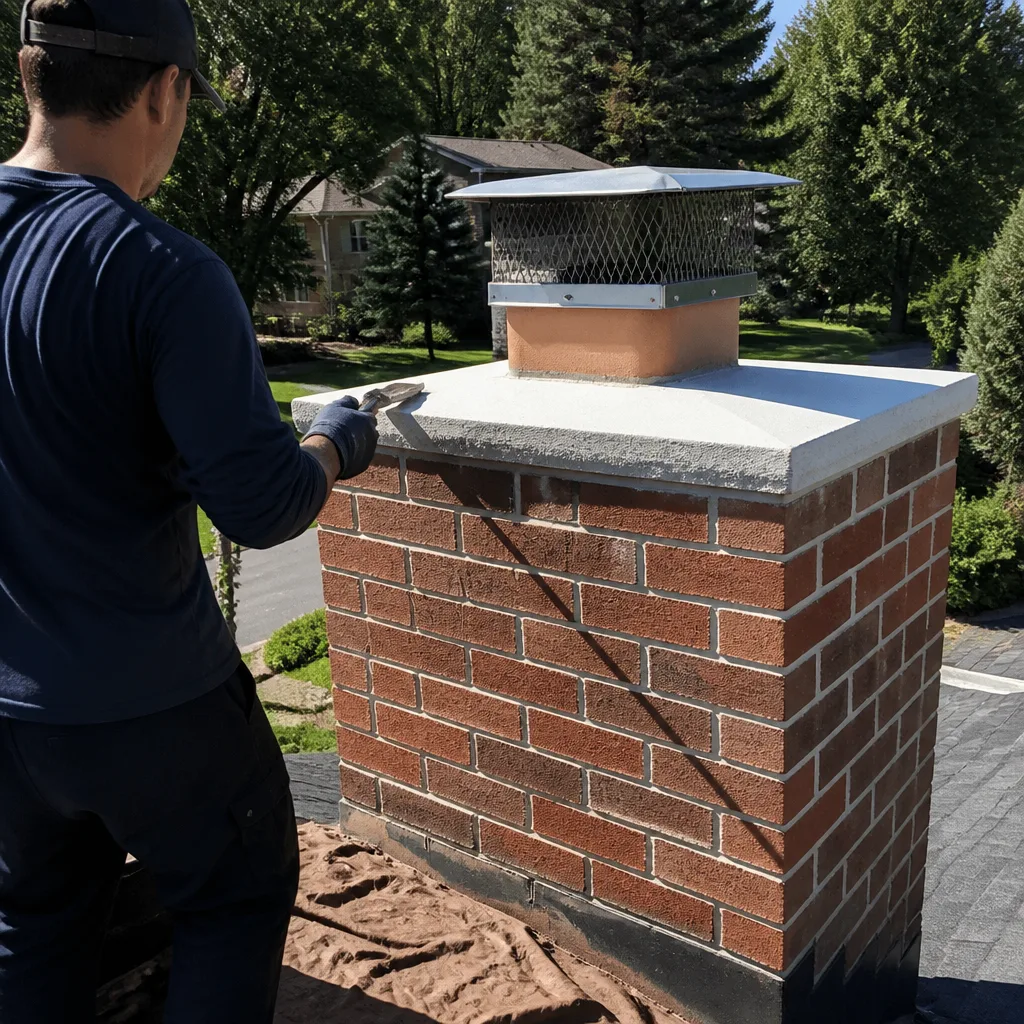
Level 1 sweep and inspection to the NFPA 211 annual standard - flue, crown, cap, and flashing checked and photographed
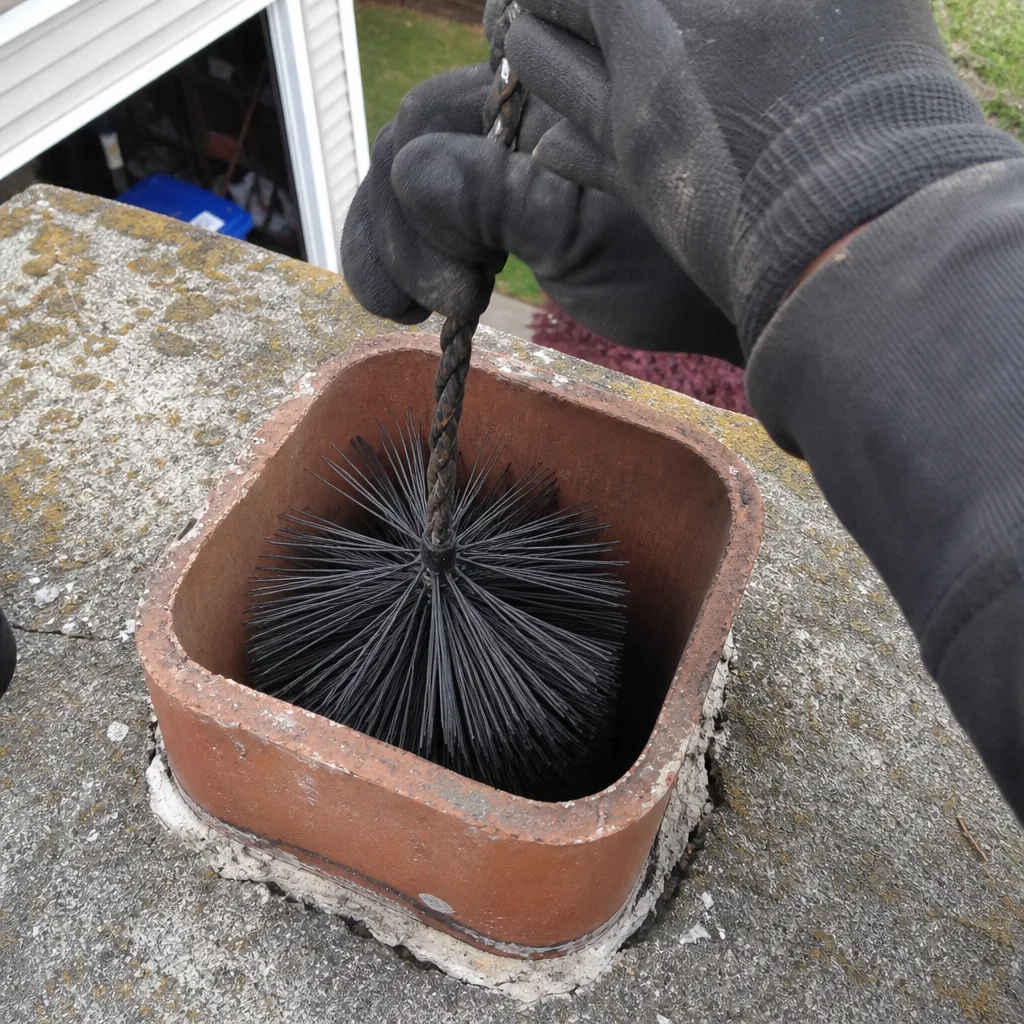
Chimney sweep logs do not sweep chimneys. They loosen some creosote - which then falls where a brush and vacuum still have to collect it.
 Before
 After
After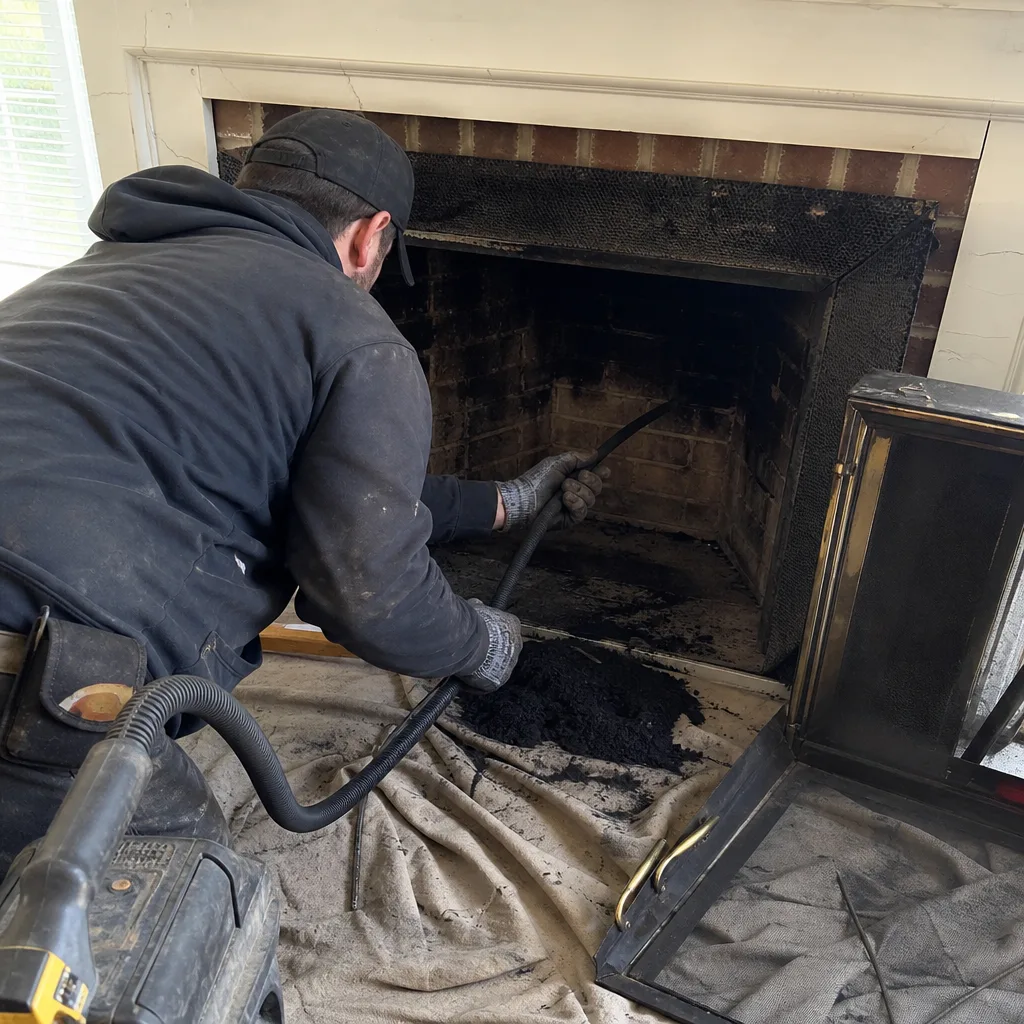 Before
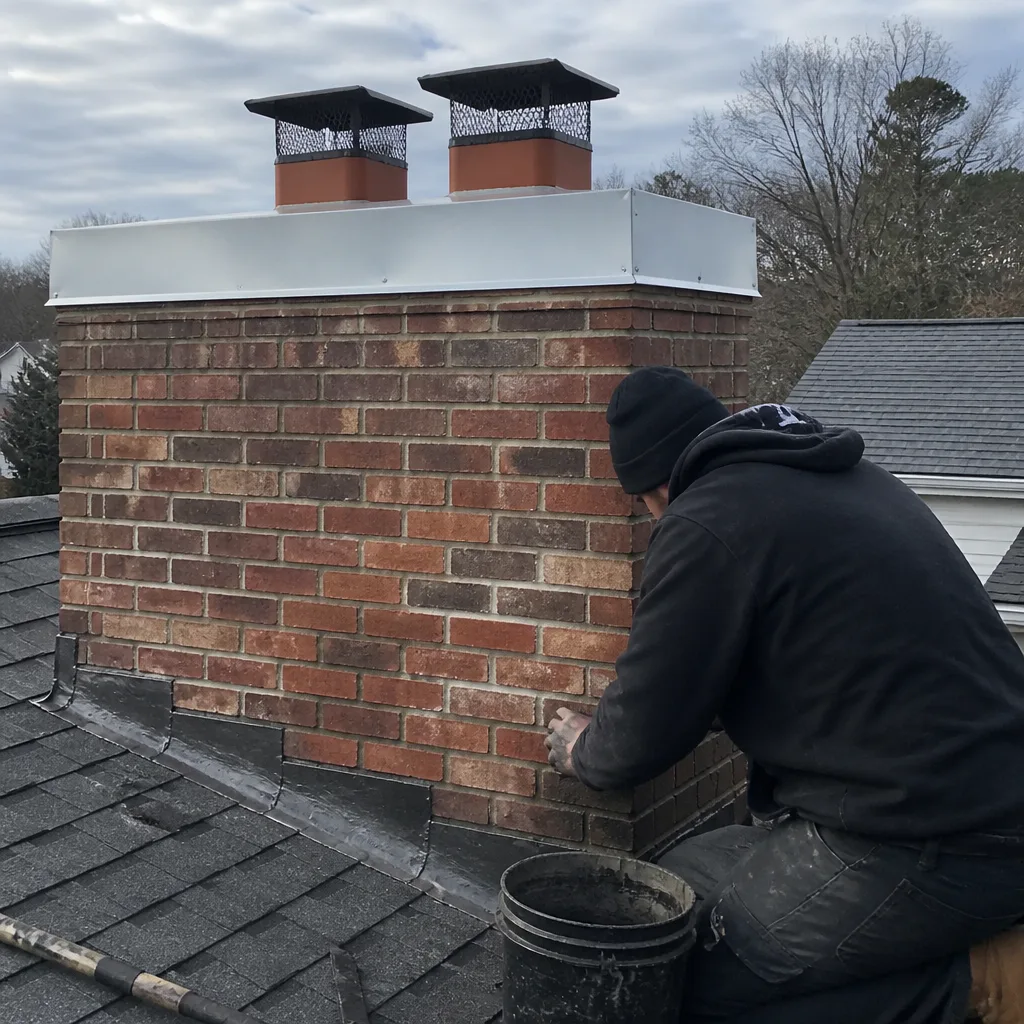 After
After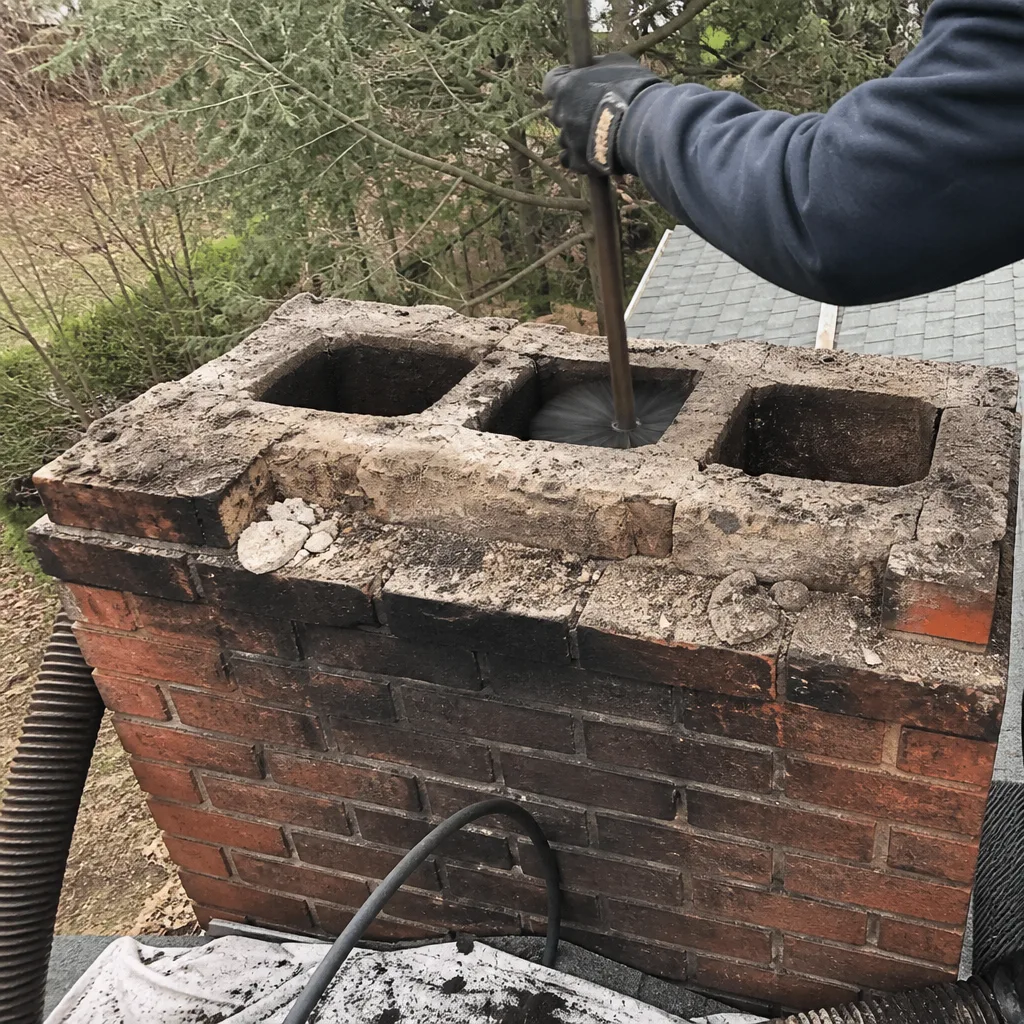 Before
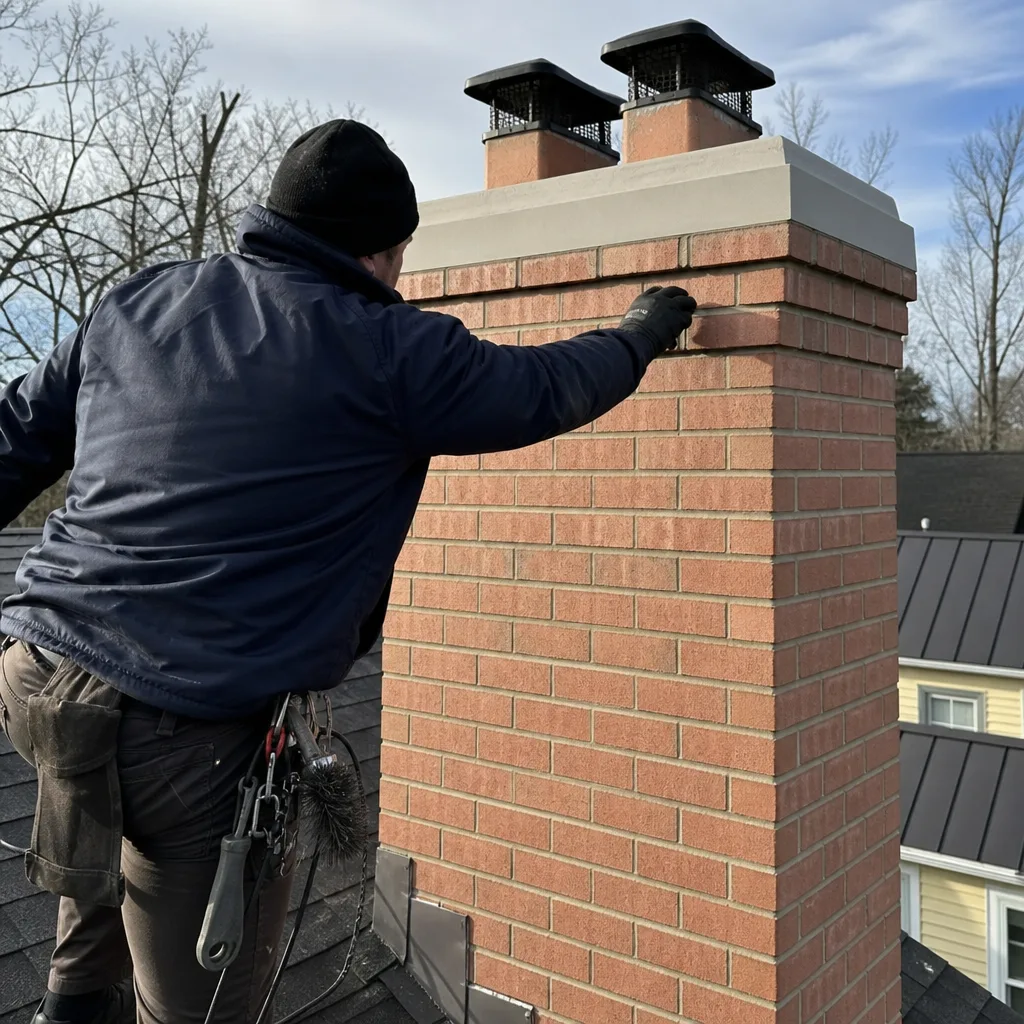 After
AfterChimney Cleaning Warning Signs: A Annapolis Homeowner’s Reference Guide
Smoke backing into the room gets immediate attention. A white stain on the exterior brick gets ignored. That white stain, called efflorescence, is often the earlier warning of the two. It signals active water infiltration through the liner, and in Annapolis, where Chesapeake Bay humidity and freeze-thaw cycles work on brick year-round, that stain is a countdown, not a cosmetic issue. This guide organizes chimney warning signs by urgency, not by location. You’ll learn which signs mean stop using the fireplace tonight, which ones mean schedule service within 30 days, and which ones you can document and monitor.
Quick Answer
The most urgent chimney warning signs in Annapolis are smoke rolling back into the room, a strong smoky odor at a closed damper, visible flame at the exterior, or an active leak after rain. These mean stop using the fireplace immediately and schedule a professional camera inspection. Slower-developing signs like efflorescence on exterior brick, minor spalling in the firebox, or a faint creosote smell can typically wait 30 days, but should be photographed and documented now so a sweep can compare conditions over time.
Table of Contents
- The Three-Tier Urgency System
- Tier 1: Stop-Use-Now Signs
- Tier 2: Schedule-Within-30-Days Signs
- Tier 3: Monitor-and-Document Signs
- Annapolis Exterior Signs: Efflorescence, Spalling, and Salt
- Draft Problems vs. Creosote Odor vs. Animal Intrusion
- Firebox Signs Homeowners Misread
- How to Document What You Observe
- Common Mistakes to Avoid
- When to Call a Professional
- Frequently Asked Questions
- The Bottom Line
BeforeAfterThe Three-Tier Urgency System
Most chimney warning-sign lists sort by location: exterior, interior, flue, cap. That format fails homeowners because it buries the one sign that matters most behind three that can wait. A cracked crown and a smoke rollback get equal visual weight. They are not equal risks. This guide sorts by urgency instead, using a three-tier system we developed from 38,000 inspections since 2009.
The system works like this:
- Tier 1: Stop-use-now. Active smoke in the living space, strong odor at a closed damper, visible flame where flame should not be. These indicate an active obstruction, backdraft, or structural breach. The fireplace is unsafe tonight.
- Tier 2: Schedule-within-30-days. Efflorescence, active leaks, glazed creosote you can see, spalling that appears to be deepening. These are progressive conditions that worsen each burn or each storm. Service within a month prevents a Tier 1 event.
- Tier 3: Monitor-and-document. Minor surface scaling, hairline cracks in a mortar joint, rust on a damper assembly. These are worth photographing and checking quarterly. They become actionable when they change.
The distinction matters because Annapolis heating season runs roughly November through March, and a Tier 2 sign spotted in October is a cheap repair. The same sign spotted in January, after three months of burn cycles, may have already progressed to a liner replacement. Time is not neutral in chimney deterioration.
Tier 1: Stop-Use-Now Signs
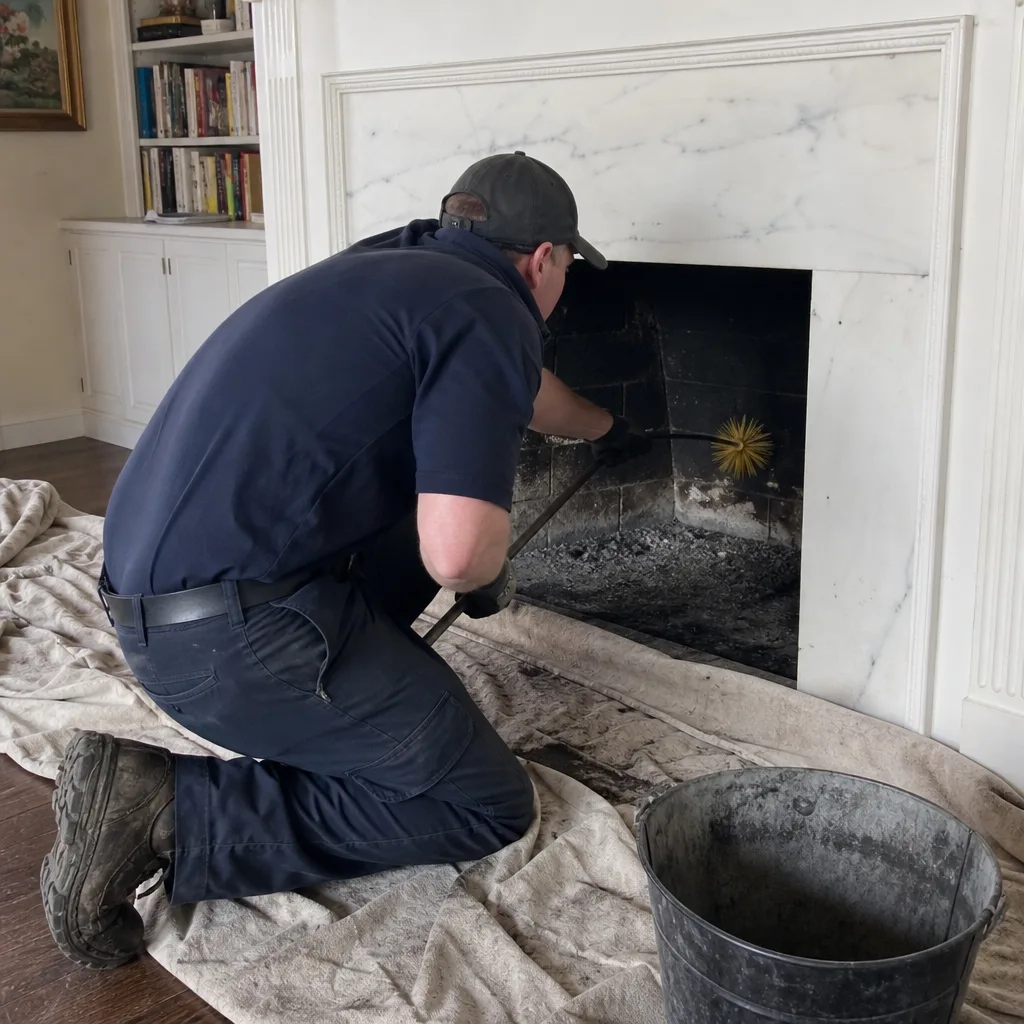
Three conditions warrant stopping use immediately. If you observe any of these, close the damper if possible, do not light another fire, and schedule a camera inspection before the next burn.
Active smoke rollback into the room
Smoke entering the living space during operation is never normal. In Annapolis homes, the most common cause is a cold flue or a negative pressure condition created by range hoods, bathroom fans, or a tight building envelope. But the cause can also be a partial obstruction from a deteriorated liner, animal nesting, or a collapsed flue tile. You cannot tell the difference from the firebox floor. What looks like a draft issue can be a structural failure further up the flue.
If smoke rolls back only during the first five minutes of operation and then corrects, it’s likely a draft priming issue. If it rolls back consistently, or worsens 20 minutes into a fire, the flue is not moving combustion gases out of the home. That’s a carbon monoxide exposure pathway, not just a nuisance.
Strong odor at a closed damper
A closed damper should seal the living space from the flue. If you smell smoke, creosote, or something acrid when the damper is closed and no fire has burned for days, the flue is pressurizing into the home. This is common in Annapolis during humid summer months when the flue warms unevenly and draws moist air down. But it can also indicate creosote accumulation at Stage 3, which off-gasses even when cold.
What you’re smelling matters. A sharp, acrid smell like old bacon fat suggests creosote. A musty, animal smell suggests nesting. A smell like wet ash suggests water has entered and pooled somewhere in the system. All three are Tier 1 because a closed damper should block all of them.
Visible flame at the exterior
If you ever see flame, embers, or glowing material at the chimney cap, behind the chimney chase, or through any gap in the masonry, call the fire department first, then a chimney professional. This is an active chimney fire or a structural breach that is allowing combustion gases into the framing. Do not wait. Do not try to put it out yourself. Do not record a video for the insurance claim until the fire department has arrived.
In our experience across Annapolis, visible exterior flame is rare. What’s more common is the precursor: a popping or crackling sound from the flue during a fire that sounds different from normal wood pops. That sound can indicate a creosote ignition inside the flue. If you hear it, stop the fire, close the damper if safe to do so, and get the flue inspected before the next use.
Tier 2: Schedule-Within-30-Days Signs
These signs do not require stopping use tonight, but they should not survive another season untreated. They are progressive, and they are the most common findings on Annapolis chimney inspections.
Efflorescence on exterior brick
Efflorescence is a white, powdery deposit left when water moves through masonry and evaporates, leaving dissolved salts on the surface. It means water is inside the brick or the flue system. In Annapolis, the Chesapeake Bay’s humidity and salt air complicate the picture. Some efflorescence is simply surface weathering from bay moisture. Some is the visible trail of water moving from inside the flue outward, which means the liner or the crown has failed.
The distinction matters. Surface weathering deposits sit on the brick face and can be brushed off without returning quickly. Liner-driven efflorescence reappears within weeks, often in vertical streaks below the crown or along the flue path. If your white stain is in a vertical pattern, or it returns quickly after brushing, treat it as Tier 2 and schedule an inspection within 30 days.
Active leaks after rain
Water in the firebox within 24 hours of rain is a direct sign of a crown failure, a flashing failure, or a liner breach. Annapolis sees an average of 42 inches of rain per year, and a single noreaster can dump two inches in a day. Every leak accelerates spalling, rusts the damper assembly, and degrades the firebrick. A leak that starts small in October becomes a significant masonry repair by February because freeze-thaw cycles expand the water inside the brick.
Take a photo of the firebox when it’s dry, then take one immediately after a heavy rain. If the firebox is visibly wet, schedule a camera inspection. The camera will show where the water is entering, which the naked eye at the firebox floor cannot.
Glazed creosote visible in the flue
If you can see a shiny, tar-like coating on the flue walls from the firebox, or on the damper plate, that is Stage 2 or Stage 3 creosote. Stage 1 is a flaky, sooty deposit that brushes off easily. Stage 2 is a granular, crunchy buildup. Stage 3 is the glazed, hardened coating that resembles a black glass glaze. Stage 3 is highly combustible and cannot be removed by a standard brush sweep. It requires chemical treatment or mechanical removal.
Seeing glazed creosote from the firebox means the upper flue, which you cannot see, is probably worse. Schedule within 30 days and stop burning until the sweep is complete if you also notice any of the Tier 1 signs.
Tier 3: Monitor-and-Document Signs
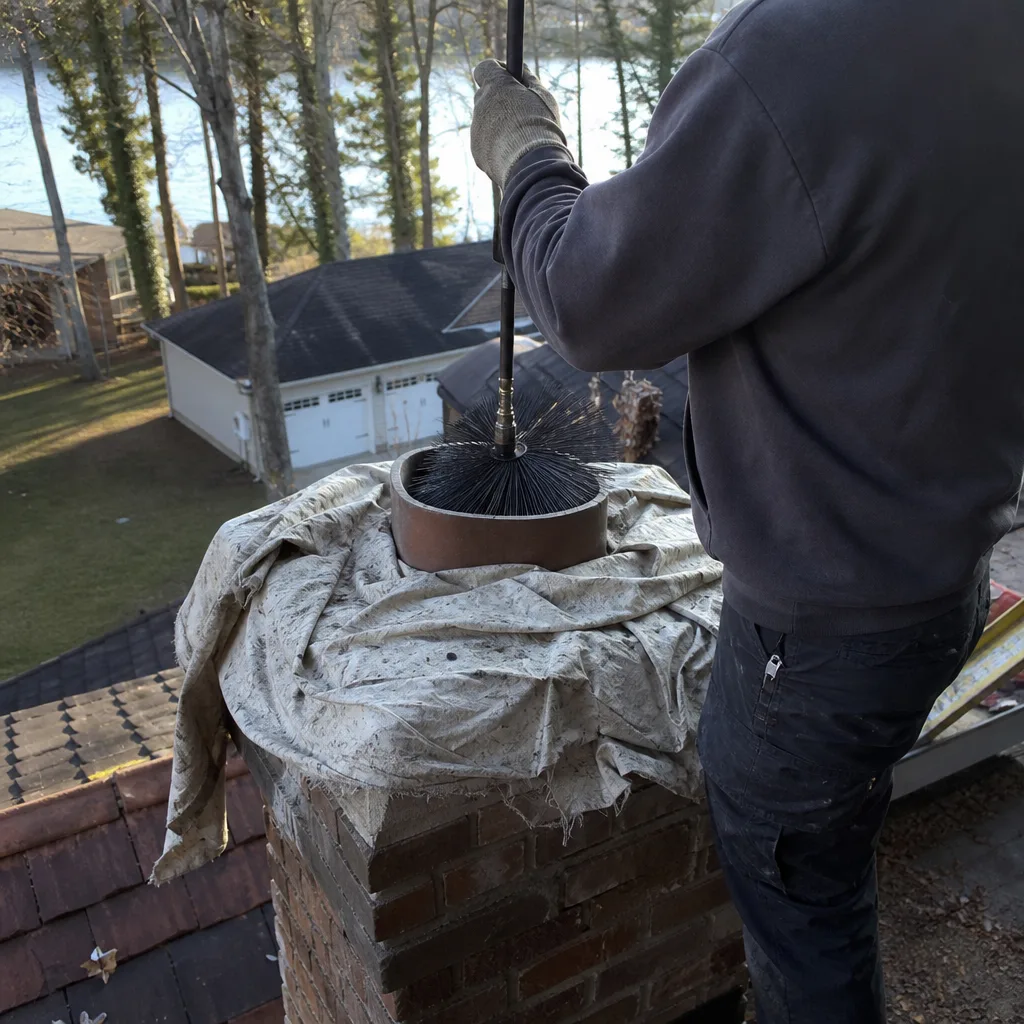
Some signs are early-warning indicators, not active failures. They matter because they help you establish a baseline. Without a baseline, you cannot tell if a small crack is growing.
Minor surface scaling on firebox brick
Surface scaling, where the firebrick face flakes off in small, flat pieces, is normal wear in a fireplace that sees regular use. It becomes a concern when the flaking is deep enough to expose the soft interior of the brick, or when the firebrick begins to crumble rather than flake. Photograph the area quarterly. If the scaling depth is stable, it’s cosmetic. If it deepens, it’s heat damage working through the firebox toward the framing.
Hairline cracks in mortar joints
Hairline cracks in mortar joints on the exterior chimney, smaller than 1/16 inch, are common in Annapolis due to seasonal expansion and contraction. What you are watching for is growth. Mark the ends of the crack with a pencil date, or photograph it with a coin for scale. If the crack widens or lengthens over six months, that’s a structural shift, not seasonal movement.
Surface rust on the damper assembly
Rust on the damper handle or plate means moisture is present in the flue, usually from condensation or a slow leak. It’s not urgent by itself, but it tells you the system is wet. Monitor it with a photo record. If the rust spreads or the damper operation becomes stiff, schedule an inspection. A seized damper is a significant repair because it often requires replacing the assembly, not just lubricating it.
Annapolis Exterior Signs: Efflorescence, Spalling, and Salt
Annapolis brick chimneys face a specific set of conditions that inland Maryland homes do not. The Chesapeake Bay’s salt air, combined with the area’s freeze-thaw cycles, creates two distinct exterior warning patterns that homeowners need to learn to tell apart.
Salt-driven efflorescence versus liner-driven efflorescence
Salt-driven efflorescence is widespread on Annapolis exterior brick. The bay’s salt air deposits chloride on masonry surfaces, and when that surface gets wet, the salt dissolves and gets drawn into the brick’s pores. When it evaporates, it leaves a white, crystalline deposit that sits mostly on the surface. It’s usually uniform across the face of the chimney, not streaked in vertical lines. It brushes off easily and returns slowly.
Liner-driven efflorescence is different in pattern and behavior. It appears as vertical streaks that follow the path of the flue inside the masonry. It returns within weeks of brushing, even when the rest of the chimney face stays clean. It often appears below the crown or at the point where the flue liner terminates at the top. If your chimney face shows vertical streaking, water is moving from inside the system outward. That’s a Tier 2 sign. If the white is uniform and slow to return, it’s bay salt weathering, which is a Tier 3 monitor condition.
Spalling: heat transfer versus cosmetic surface loss
Spalling is the term for brick faces popping off or crumbling away. Cosmetic spalling is confined to the brick surface and is caused by weathering. Heat-driven spalling is deeper and is caused by the liner failing to contain flue gases, which superheat the surrounding masonry. Heat-driven spalling often produces brick fragments on the ground around the chimney, or on the roof, and the remaining brick surface looks scorched or darkened.
In Annapolis, where many chimneys are original to homes built between 1920 and 1960, the masonry has already seen decades of thermal cycling. A chimney that has survived 60 winters on the Chesapeake is tougher than new construction, but its liner is likely original clay tile, and clay tile liners crack eventually. If you see spalling combined with any scorching pattern, schedule a Level 2 camera inspection to check liner integrity.
Draft Problems vs. Creosote Odor vs. Animal Intrusion
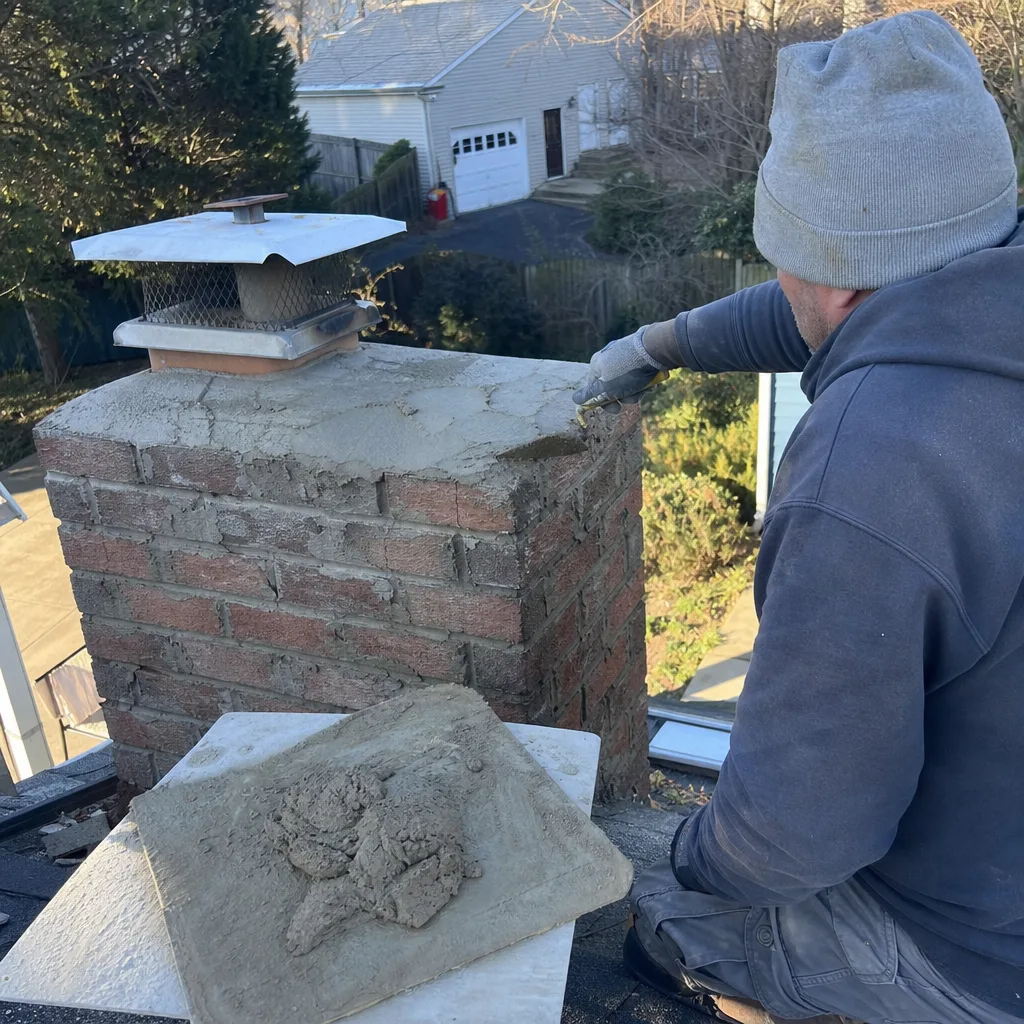
Three different conditions produce three different sensations from the fireplace, and homeowners routinely confuse them. They have different causes, different risks, and different responses.
Draft problems: what they feel like
A draft problem feels like cold air moving past you when you stand near the fireplace, even when no fire is burning. It often comes and goes with weather patterns. In Annapolis, you may notice it most on damp, overcast mornings when the flue is filled with dense, moist air. A draft problem is caused by pressure imbalances in the home, an improperly sized flue, or a chimney that is too short for the roof pitch. It is not inherently dangerous, but it makes the fireplace hard to use and can push cold air into the home all winter. It also reverses suddenly, which creates a smoke rollback when you try to light a fire.
Creosote odor: what it smells like
Creosote odor smells like a cold campfire, but sharper, more acrid, with a petroleum or tar undertone. It is strongest when the damper is closed and the home is humid, because moisture mobilizes the odor molecules. If the smell is constant and strong, the creosote loading is significant. Creosote odor is a combustion byproduct, and a heavy creosote load is a fire hazard. If the smell is strong enough to notice from across the room, schedule a sweep.
Animal intrusion: what it sounds and smells like
Animal intrusion sounds like scratching, scurrying, or chittering from the flue, usually at dawn or dusk. It smells musty and organic, like wet leaves or a rodent nest. Squirrels, raccoons, and chimney swifts are the primary intruders in Annapolis. Their nests block the flue, which creates a backdraft, and the nesting material is flammable. If you hear animals in the chimney, do not smoke them out by lighting a fire. That creates a flue fire and traps the animal. Schedule removal and a proper cap installation.
Each of these three conditions has a different urgency. A draft problem can wait. Creosote odor should be scheduled within 30 days. Animal intrusion needs immediate attention because the nest is an active obstruction.
Firebox Signs Homeowners Misread
The firebox is the only part of the chimney system a homeowner can fully see, which means it gets over-interpreted. Two specific patterns get misread constantly.
Spalling brick in the firebox: liner heat transfer versus cosmetic scaling
When firebrick inside the firebox begins to flake, crumble, or develop deeper pitting, homeowners often assume it’s a liner failure. That’s sometimes true. But there is another explanation: the firebrick itself is a consumable material. It has a service life, typically 10 to 15 years under regular use. If your firebox is older than that and shows even, shallow spalling across the base and side walls, it’s probably normal wear. If the spalling is deep, localized, or accompanied by scorching of the brick above the firebox opening, that’s heat transfer from a liner that is no longer containing flue gases. The distinction matters because replacing firebrick is a $300 to $800 job. Replacing a liner is a $2,500 to $6,000 job in Annapolis. A camera inspection settles which condition you have.
Glaze patterns that signal Stage 2 or Stage 3 creosote
Creosote shows up in three visual patterns in the firebox. A flat, sooty, black dust that wipes off with a finger is Stage 1, which is normal and removable with a standard sweep. A bumpy, granular texture that feels like coarse sand is Stage 2, which requires more aggressive mechanical brushing. A shiny, smooth, tar-like glaze that will not wipe off is Stage 3, which typically requires chemical treatment. If you see glazed sections next to unglazed sections, the fire is not burning hot enough to prevent creosote formation, or the wood being burned is unseasoned. In Annapolis, where many homeowners burn wood for ambiance rather than heat, low-temperature fires are common, and low-temperature fires produce Stage 3 creosote faster than hot fires do.
How to Document What You Observe
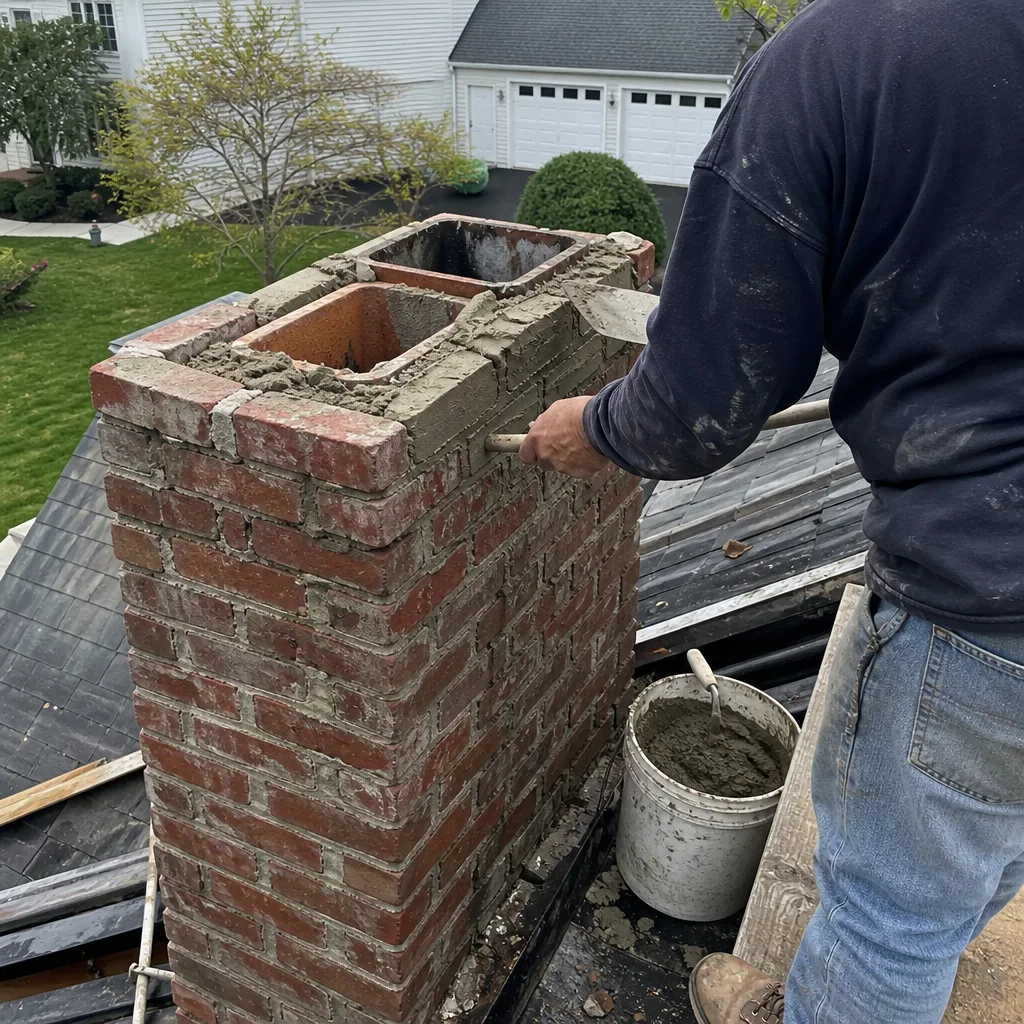
Before you call a sweep, gather three things: photos, a description in specific terms, and a timeline. The quality of what you provide determines whether the inspector arrives with the right equipment and the right expectations.
- Photograph the condition. Use your phone, in daylight if possible. Take one wide shot showing the entire chimney from the ground, one close-up of the issue, and one from a different angle. For exterior signs, photograph the chimney from all four sides if accessible. For interior signs, photograph the firebox, the damper, and any visible flue surface. A coin or a ruler in the frame gives scale.
- Describe what you observe without interpreting it. Instead of “the brick looks bad,” write “white vertical streak below the crown on the north face, about 3 feet long, appeared within the last 6 months, does not brush off.” Instead of “the fireplace smells weird,” write “acrid, smoky odor at the firebox, strongest in the morning, present for 3 weeks, damper closed.” Plain observation is more actionable than a diagnosis.
- Note the timeline. When did you first notice the condition? Has it changed since then? Does it worsen after rain, after a fire, or in certain weather? A condition that appeared suddenly after a storm is a different diagnostic problem than one that has been slowly developing for two years.
- Document past service. If the chimney was swept or inspected before, find the record. The previous sweep’s notes may describe the liner condition, creosote classification, or a repair recommendation that was deferred. In Annapolis, homes that change hands frequently, especially in the 2015 to 2025 purchase window, often have deferred maintenance that the previous owner knew about but did not address.
This documentation format turns “something seems wrong” into an inspection plan. The sweep knows to bring scaffold-grade ladders for a crown exam instead of expecting a firebox-only look. It also protects you. A documented condition, photographed before the sweep, is a record you can compare against the post-service report to verify what was done.
Common Mistakes to Avoid
- Ignoring a closed-damper odor because the fireplace “works fine.” A working fire and a safe flue are not the same thing. Odor at a closed damper means the flue is communicating with the living space, regardless of how the last fire burned.
- Treating all white brick staining as harmless bay weathering. In Annapolis, the salt air makes efflorescence common, but vertical streaking that returns quickly is a moisture pathway, not a surface deposit. Learn to tell the two apart.
- Waiting until fall to address a spring leak. If the firebox was wet in April, the summer heat dries it out and the issue looks gone. It is not gone. The water intrusion path is still open, and the next rain will find it again. Annapolis summer humidity keeps the masonry damp internally, accelerating deterioration even when no rain falls.
- Burning unseasoned wood because it’s cheap. Wet wood, especially the oak and poplar common in Anne Arundel County, produces low-temperature fires and heavy creosote. What you save in firewood costs, you pay back in more frequent sweeps and a higher creosote classification.
- Assuming a home inspection covered the chimney. A standard home inspection includes a visual look at the firebox and the exterior. It does not include a camera scan of the flue interior. The liner, the smoke chamber, and the flue joints are invisible to a standard home inspection. If you bought an Annapolis home between 2015 and 2025 and never had a dedicated chimney inspection, the interior of the flue has not been examined.
- Using a fireplace while the CO detector is disconnected or dead. If you have a working fireplace, you need a working CO detector. That’s not a chimney maintenance recommendation. It’s a life safety baseline.
When to Call a Professional
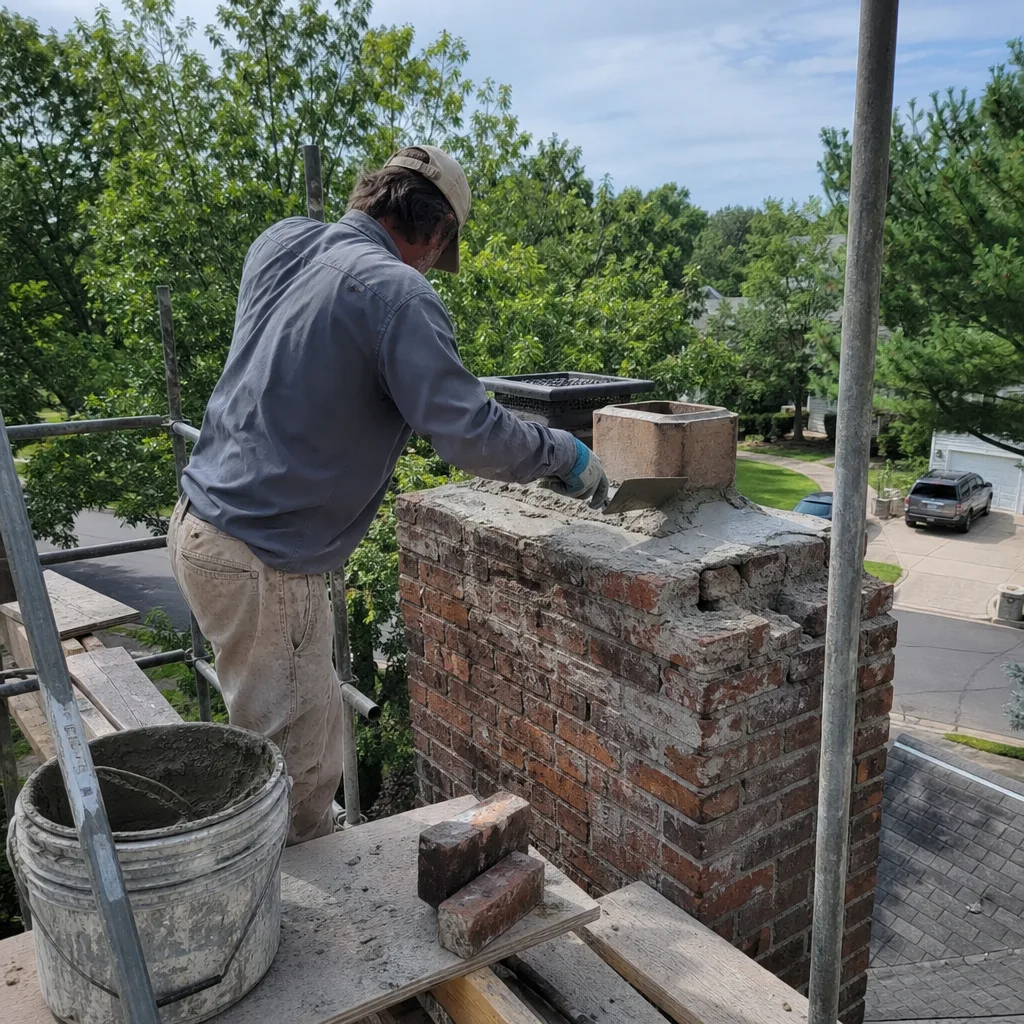
Call a chimney professional when you observe any Tier 1 sign, any Tier 2 sign that has persisted longer than 30 days, or when you cannot confidently classify what you are seeing. A camera inspection settles the question in under an hour. The cost of an inspection in Annapolis is a fraction of the cost of a liner replacement, and the inspection provides a photo record you keep whether or not you proceed with any work. If you have a written estimate from another company for chimney repair, bring it in. We will provide a second opinion on the written scope at no charge. Level Two Chimney Annapolis offers free estimates in Annapolis. Call (443) 274-4231 to schedule.
Frequently Asked Questions
A standard chimney sweep in Annapolis typically costs between $180 and $300, depending on creosote stage and flue accessibility. A Level 2 camera inspection, which includes the sweep and a full documented photo record of the flue interior, smoke chamber, and crown, runs higher. Level Two Chimney Annapolis provides a written price before any work starts, with the scope and warranty specified in writing.
The National Fire Protection Association recommends sweeping whenever creosote reaches 1/8 inch of accumulation, and at minimum once per year for regularly used fireplaces. In Annapolis, where burn season is shorter than in colder climates but humidity is higher, annual sweeping is the right rhythm for most homes. If you burn unseasoned wood or use the fireplace weekly, sweep twice per season.
Creosote accumulates in stages. Stage 1 is a sooty coating. Stage 2 is a granular, crunchy buildup. Stage 3 is a hardened, glazed layer that ignites at roughly 1,000 degrees and sustains a chimney fire. The fire burns hot enough to crack the flue liner, and once the liner is cracked, combustion gases and heat can reach the home’s framing. A chimney fire is not a small event. It is a structural fire that starts inside your chimney and can move into the house in minutes.
The only reliable way to know is a Level 2 camera inspection. A camera scan shows cracks, gaps between flue tiles, and areas where the liner has spalled away from the masonry. Signs that suggest liner failure from the outside include vertical efflorescence streaking, heat-driven spalling, and smoke odor in the house when the damper is closed. In Annapolis, original clay tile liners in homes built before 1960 are often cracked after decades of thermal cycling, even when the chimney looks fine from the ground.
Cleaning a chimney requires working at roof height, which means ladder work on a pitched surface, often in Annapolis homes with two-story rooflines and steep pitches. The flue interior is not visible from the firebox, so without a camera, you cannot verify whether the sweep actually removed the creosote. For high-tension or high-access work, we recommend a trained professional with insurance and fall protection. A chimney fire from missed creosote is more expensive than a sweep.
A Level 2 inspection includes a camera scan of the entire flue interior, the smoke chamber, the crown, and the flashings, with photographs of every section. A standard home inspection includes a visual look at the firebox and the exterior chimney face. The interior of the flue, which is where liner failures and creosote accumulation occur, is not examined in a standard home inspection.
The Bottom Line
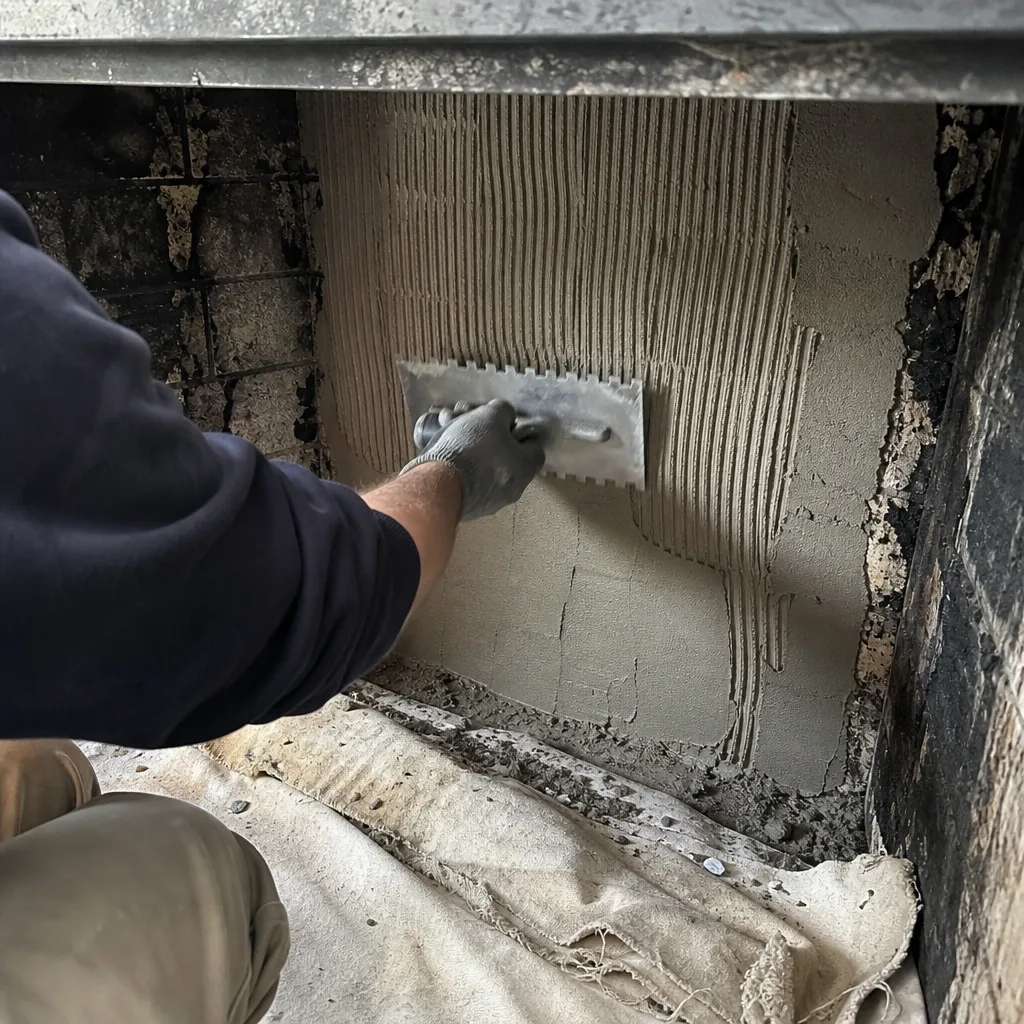
Chimney warning signs are not all equal. A smoke rollback is a stop-use-now event. A vertical efflorescence streak on Annapolis brick is a schedule-within-30-days event. A hairline mortar crack is a monitor-and-document event. The skill is telling them apart, and the documentation you keep is what makes the next inspection useful. Photograph what you see, describe it without interpreting it, and track the timeline. When you call, ask for a camera scan and a written price before work starts. A documented chimney is a maintainable chimney. An undocumented one is a guess.
Written by Corrine Halstead, Owner at Level Two Chimney Annapolis, serving Annapolis since 2009.
Key Takeaways
- Stop using the fireplace immediately for smoke rollback, strong odor at a closed damper, or visible exterior flame.
- Schedule within 30 days for vertical efflorescence, active leaks, or visible glazed creosote.
- In Annapolis, learn to distinguish salt-driven efflorescence from liner-driven efflorescence by pattern and recurrence.
- Document conditions with photos, plain descriptions, and a timeline before calling a sweep.
- Every inspection should include a camera scan and a written price before work starts.
- For a free estimate in Annapolis, call (443) 274-4231.